Content that converts doesn’t begin with writing—it begins with listening. Before you type a single word, you need to understand who you’re speaking to, what they care about, and what problem they’re trying to solve. That’s the foundation of content that resonates, builds trust, and drives action.
When you skip this step, even the most beautifully crafted sentences fall flat. But when you take the time to study your audience—what they need, how they speak, and why they’re searching—you can create copy that connects deeply and performs consistently.
In this guide, we’ll show you how to turn insight into impact—starting with understanding your audience before writing anything at all.
 Generic website content rarely leads to conversions. It’s like offering everyone the same solution; it might work for some, but not for most. Effective content speaks directly to a specific audience’s needs and desires. Top-performing websites understand this, dedicating roughly 40% of their content creation time to audience research. This investment improves various aspects, from headline performance to conversion rates.
Why Understanding Your Audience Is Crucial for Writing Website Content
Understanding your audience forms the foundation of effective website content. It involves going beyond basic demographics to understand their motivations, pain points, and the language they use. It’s like constructing a building: you wouldn’t begin without a blueprint. Similarly, creating website content requires a clear image of your target audience. For instance, writing for tech-savvy millennials requires a different approach than writing for retirees seeking financial advice. The language and tone must resonate with the specific target group.Research Techniques to Uncover Your Audience’s Needs
So, how can you gain insight into your audience’s perspective? Here are a few practical research techniques:- Customer Interviews: Directly speaking with customers provides valuable insights into their needs and challenges. These conversations can uncover hidden pain points.
- Social Media Listening: Monitoring social media platforms reveals how your audience discusses your industry and their needs. This provides an understanding of their language and interests.
- Analytics Data: Website analytics tools like Google Analytics offer a wealth of data about user behavior, such as page visits, time spent on pages, and keywords used. This data can reveal valuable insights into their preferences.
Creating Buyer Personas That Guide Your Writing
After gathering audience insights, you can create buyer personas. These are semi-fictional representations of your ideal customers, based on your research and data. A well-crafted persona goes beyond demographics to include:- Goals and Aspirations: What are they aiming to achieve?
- Challenges and Frustrations: What problems do they face?
- Values and Beliefs: What holds importance for them?
- Information Sources: Where do they seek information?
Putting It All Together
By understanding your audience before writing, you pave the way for successful content. Just as a tailor crafts a suit to fit an individual, you create content aligned with your audience’s specific needs and preferences. This targeted approach not only boosts engagement but also increases conversions, turning visitors into loyal customers.Crafting Headlines That Stop Scrolling Cold
Your headline is the first impression you make on a potential reader. Often, it’s the only impression. In the endless scroll of online content, your headline has mere seconds to grab attention. What makes a headline click-worthy? This section explores the psychology and strategy behind crafting headlines that truly connect. We’ll draw on analysis of thousands of high-performing web pages to uncover what works.The Psychology of Clicks: Understanding What Makes a Headline Irresistible
Effective headlines tap into basic psychology. The curiosity gap is a powerful tool. It creates a void the reader feels compelled to fill. Headlines like “The One Thing Your Website is Missing” or “The Secret to Writing Content That Converts” promise valuable insights, enticing clicks. Emotional hooks also play a key role, forging a connection by evoking feelings like excitement, fear, or empathy.Benefit-Driven Headlines: Showing Readers What’s in It for Them
Grabbing attention is only half the battle. Your headline must also clearly communicate value. Benefit-driven headlines focus on positive outcomes. For instance, “Boost Your Website Traffic with These Proven Content Strategies” instantly highlights the benefit of reading the article. This is especially useful for how-to articles, where readers seek solutions.SEO vs. Human Appeal: Finding the Right Balance
Keywords are essential for Search Engine Optimization (SEO), but keyword stuffing can make headlines sound robotic. The goal is to balance SEO requirements with human appeal. Use keywords strategically, but prioritize clarity and conciseness. Think of keywords as ingredients and engaging language as the recipe. You might be interested in: How to master landing pages….Creating Urgency and Using Power Words
Urgency can encourage action, but avoid sounding desperate. Phrases like “Limited Time Offer” or “Don’t Miss Out” can be effective when genuine. Power words like “Ultimate,” “Proven,” and “Essential” add impact and authority. Use them sparingly to maintain their effectiveness.A/B Testing and Continuous Improvement
There’s no magic headline formula. A/B testing lets you compare different variations to see what resonates with your audience. Tracking click-through rates and engagement metrics allows you to continually refine your approach and optimize for maximum impact.Common Headline Mistakes to Avoid
Even seasoned writers make headline mistakes. Here are some common pitfalls:- Being too vague or generic: Specificity is key to capturing attention.
- Misrepresenting the content: Clickbait erodes trust.
- Ignoring your target audience: One size doesn’t fit all.
Writing Content That Guides Visitors to Action
 Creating compelling website content goes beyond simply sharing information. It involves strategically guiding your visitors toward taking a specific action. This could be anything from making a purchase to signing up for a newsletter or exploring more of your website. It’s about seamlessly blending valuable information with persuasive language.
The Art of Persuasive Web Copy
Persuasive web copy centers around understanding your audience’s needs and addressing their potential hesitations. Think of it as a conversation. You anticipate their questions and provide thoughtful answers. This builds trust and credibility, making visitors more open to your message. Effective persuasion focuses on highlighting the benefits, not just listing features. Instead of simply stating the technical specs of a product, explain how it solves a particular problem for the customer. This approach resonates more effectively with potential buyers.Strategic Placement of Calls-to-Action
Calls-to-action (CTAs) are essential for guiding visitors. They act as signposts, directing visitors to the next step. However, overwhelming visitors with CTAs can be detrimental. The key is strategic placement. CTAs should feel natural within the content flow, appearing after you’ve provided value and addressed concerns. Consider the user experience. Where would a CTA make the most sense in the reader’s journey? This thoughtful placement increases the likelihood of clicks and conversions.The Power of Social Proof
Social proof is a powerful tool for building trust and credibility. Testimonials, reviews, and case studies effectively demonstrate the value of your product or service. This is particularly relevant for articles about writing effective website content. Showing how your content strategies have helped other businesses achieve their goals can persuade potential clients of your expertise. Writing strong website content is crucial for businesses because it directly impacts their online presence and customer engagement. In fact, 72% of marketers who use content marketing report an increase in leads, highlighting the effectiveness of well-crafted content. Find more detailed statistics here: https://www.omnius.so/blog/content-writing-statisticsContent Frameworks for Different Page Types
Different pages on your website serve different purposes and require tailored content strategies. Your homepage should quickly communicate your value proposition and guide visitors to key sections of your site. Product pages need detailed descriptions, highlighting benefits and addressing potential objections. Blog posts, on the other hand, provide opportunities to share valuable insights and build relationships with your audience. Learn more about content marketing for small businesses… Understanding these nuances is essential for creating effective content that guides visitors toward the desired action.Overcoming Conversion Obstacles
Many factors can hinder conversions. Poor website design, confusing navigation, or a lack of clear CTAs can create friction in the user experience. Content that’s too sales-focused or fails to address customer concerns can also erode trust. By analyzing your website and identifying potential roadblocks, you can optimize your content for smoother conversions. This might involve simplifying your message, improving website usability, or incorporating more social proof.Essential Content Types Every Website Actually Needs
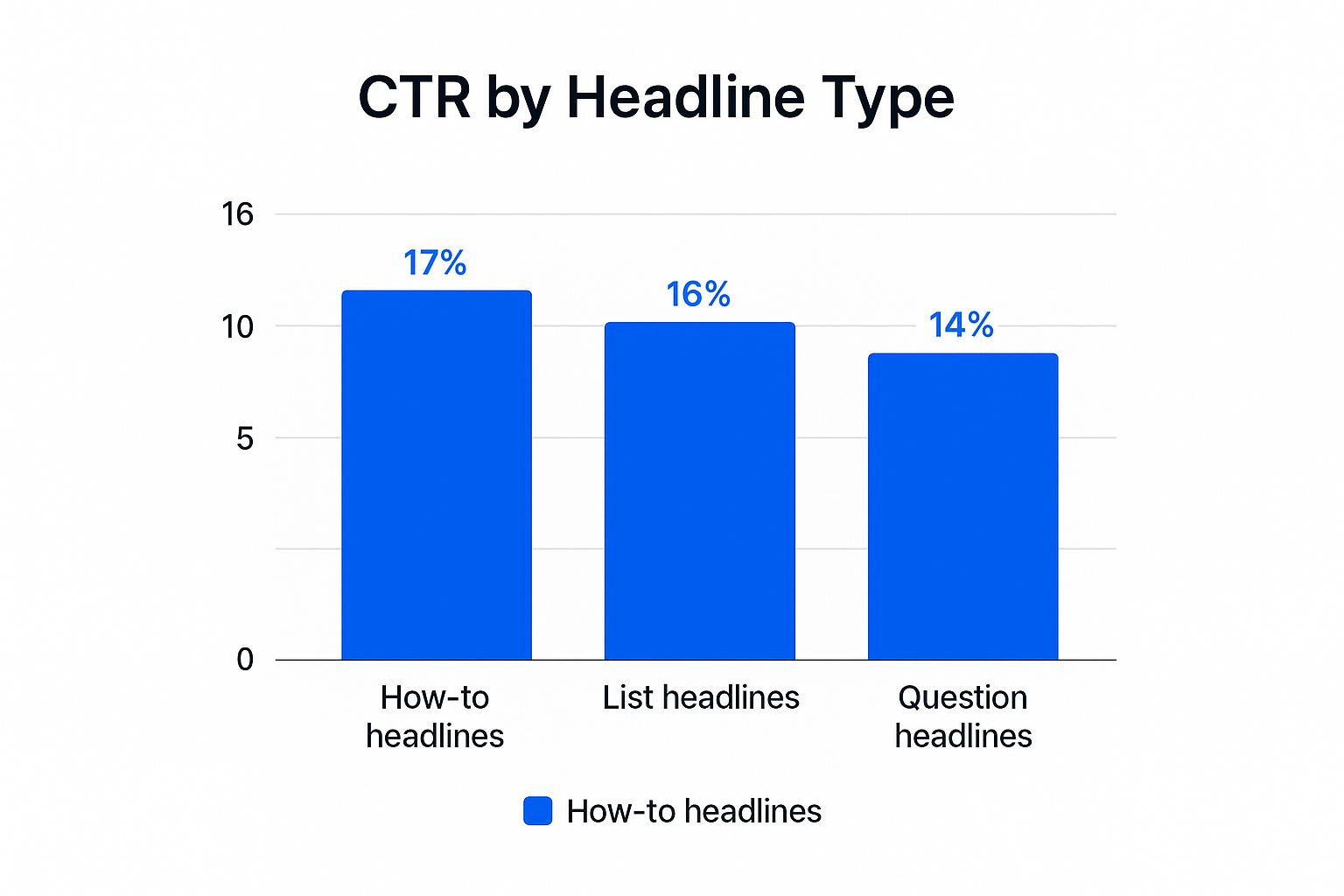 The infographic above illustrates click-through rates for various headline types. How-to headlines lead the pack at 17%, followed by list headlines at 16%, and question headlines at 14%. This highlights the importance of compelling headlines that pique reader interest. Understanding the purpose of different content types is equally vital.
Just like a toolbox needs various tools, your website requires different content types to succeed. Each piece plays a unique role, from attracting visitors to converting them into loyal customers. Let’s explore the essential content every website needs.
The infographic above illustrates click-through rates for various headline types. How-to headlines lead the pack at 17%, followed by list headlines at 16%, and question headlines at 14%. This highlights the importance of compelling headlines that pique reader interest. Understanding the purpose of different content types is equally vital.
Just like a toolbox needs various tools, your website requires different content types to succeed. Each piece plays a unique role, from attracting visitors to converting them into loyal customers. Let’s explore the essential content every website needs.
Homepage Content: Making a Powerful First Impression
Your homepage is your digital first impression. It’s often the initial point of contact for potential customers. It should clearly convey your value proposition and guide visitors further into your site. Think of it as a concise and compelling elevator pitch, focusing on benefits.Product Descriptions: Turning Browsers into Buyers
Effective product descriptions are key to persuading potential buyers. They go beyond simply listing features; they highlight the benefits and address any concerns. They show how the product solves a problem or improves a customer’s life.Blog Posts: Building Authority and Engagement
Blog posts allow you to share insights, showcase your expertise, and connect with your audience. They create a platform for thought leadership and ongoing conversation. This builds trust and positions your business as a valuable resource. This is particularly important for learning how to write effective website content. The current demand for content mirrors what freelance writers are producing. Website copy makes up 30% of their output, followed by copywriting at 24%, and email content at 22%. More detailed statistics can be found here: https://elnacain.com/blog/freelance-writing-stats-facts/About Us Page: Connecting on a Personal Level
The About Us page humanizes your brand. It shares your story, values, and allows you to connect with your audience. This personal touch can greatly influence a visitor’s decision to engage with your brand.Testimonials and Case Studies: Building Credibility and Trust
Testimonials and case studies offer powerful social proof. They provide evidence of your expertise and positive impact on clients. Real-world examples build confidence and demonstrate the value you provide.FAQ Pages: Answering Questions and Overcoming Objections
A comprehensive FAQ page proactively addresses common questions and concerns. It simplifies the buying process and empowers customers to make informed choices, improving user experience and conversions.Email Content: Nurturing Leads and Building Relationships
Email remains a powerful tool for direct communication. From welcome emails to promotional offers, email content cultivates leads and builds lasting customer relationships. It’s a personalized way to deliver valuable information and foster brand loyalty. To illustrate the varying effectiveness of different content types, consider the following table: Essential Website Content Types and Their Conversion Rates Comparison of different content types, their primary purposes, and average conversion rates| Content Type | Primary Purpose | Average Conversion Rate | Best Use Cases |
|---|---|---|---|
| Landing Pages | Generate leads and drive specific actions | Varies greatly (2-10% is common) | Lead capture, product promotion |
| Product Pages | Showcase products and encourage purchases | Generally lower than landing pages (1-3%) | E-commerce sales |
| Blog Posts | Provide valuable information and build authority | Typically very low (<1%) but drives traffic to higher-converting pages | Content marketing, SEO |
| Case Studies | Demonstrate value and build trust | Can be quite high (5-15%) depending on targeting and quality | B2B sales, complex product demonstrations |
SEO Writing That Humans Actually Want to Read
 Writing website content that ranks well and also appeals to real people can feel like a tough challenge. But it’s absolutely possible. The secret is understanding how to write for both search engines and your audience. This means combining smart keyword choices with engaging, well-written content.
Keyword Research: Understanding What Your Audience Is Searching For
Before writing anything, it’s important to know what your audience is searching for. This process is called keyword research. Think of keywords as the connection between your content and people looking for information related to your business. Effective keyword research is more than just finding popular search terms. It’s about understanding the search intent behind those keywords. What are people actually looking for when they use a specific phrase? By understanding this, you can create content that truly meets their needs. Many tools can help with keyword research. Free options like Google Keyword Planner and paid platforms like SEMrush provide data on search volume, keyword difficulty, and related terms. These tools provide valuable insights into audience search behavior and keyword competitiveness.Natural Keyword Integration: Weaving Keywords into Your Content Seamlessly
After finding the right keywords, incorporate them smoothly into your content. Avoid keyword stuffing, or overusing keywords. This can make your writing sound unnatural and turn readers away. Instead, weave your keywords naturally into your headings, subheadings, and body text. Use them where they make sense in the flow of your writing. Write in a conversational tone that prioritizes clear, easy-to-read content. This keeps your content engaging for readers and also signals relevance to search engines. The rising demand for quality, SEO-optimized content drives the growth of content writing services. For example, article writing is expected to grow significantly as businesses value informative, SEO-friendly content. Learn more: https://www.cognitivemarketresearch.com/content-writing-services-market-report.Structuring Your Content for Both Humans and Search Engines
How you organize your content matters for both user experience and SEO. Use header tags (H1, H2, H3, etc.) to break your content into clear sections. These tags help readers and search engines understand how your content is organized. They improve readability and help search engines understand the hierarchy of information. For more website tips, read: How to create an SEO-friendly website. Also, break up long blocks of text with bullet points, lists, and visuals like images and videos. This makes your content more engaging and visually appealing. Visuals can also improve understanding and add more depth to your writing.Meta Descriptions and Other Technical Elements
Meta descriptions are short summaries of your webpage that show up in search results. While they don’t directly affect ranking, they are key for getting people to click on your link. Write engaging meta descriptions that accurately represent your page’s content. Think of them as your short pitch in search engine results. Other technical aspects like URL structure also matter for SEO. Short, descriptive URLs that relate to your page content are best. They improve user experience and help search engines understand your page. By understanding these elements of SEO writing, you can create content that ranks well and provides real value to your audience. It’s about finding the balance between optimizing for search engines and creating a positive user experience.Building Systems That Make Content Creation Sustainable
Creating top-notch website content consistently isn’t about spontaneous inspiration; it’s about establishing sustainable systems. Just as a well-oiled restaurant relies on smooth kitchen operations, content creation thrives on efficient workflows and dependable tools. This section explores how to build these systems, ensuring high-quality content while maximizing output.Establishing Efficient Content Workflows
Creating website content involves several stages, from initial brainstorming to final publication. A structured workflow ensures each step is handled effectively. This is vital for maintaining consistent quality across all content. A typical workflow might resemble this:- Planning: Defining your content strategy and identifying target keywords. This lays the groundwork for success.
- Research: Gathering information and insights relevant to your topic. This ensures accuracy and provides valuable depth.
- Writing: Crafting the content itself, focusing on clarity and reader engagement. This is where your core message comes to life.
- Editing: Reviewing and refining the content for grammar, style, and factual accuracy. This presents a professional image.
- Optimization: Implementing SEO best practices to boost search engine visibility. This broadens your audience reach.
- Publishing: Uploading and scheduling the content for your website. This makes it accessible to your readers.
- Promotion: Sharing your content across various channels. This amplifies your message and expands its reach.
- Analysis: Tracking performance metrics to understand audience engagement. This informs future content creation.
Choosing The Right Content Creation Tools
Just as a carpenter needs the right tools, content creators rely on various software and platforms to streamline their work. However, not all tools are created equal. Some can hinder productivity by adding unnecessary complexity. To help you choose the best tools for your needs, we’ve compiled a comparison table: Content Creation Tools Comparison: Detailed comparison of popular content creation tools, their features, pricing, and best use cases| Tool Name | Key Features | Pricing | Best For | Pros/Cons |
|---|---|---|---|---|
| Google Docs | Collaborative writing, easy sharing, built-in grammar checker | Free | Drafting and collaborating on content | Pros: Free, accessible; Cons: Limited SEO features |
| Grammarly | Advanced grammar and style checking, plagiarism detection | Freemium (paid plans available) | Polishing and refining content | Pros: Improves writing quality; Cons: Paid features can be expensive |
| SEMrush | Keyword research, SEO analysis, content optimization | Paid (various plans) | SEO and content strategy | Pros: Comprehensive SEO toolkit; Cons: Steeper learning curve |
| Trello | Project management, task organization, workflow visualization | Freemium (paid plans available) | Managing content calendars and editorial workflows | Pros: Improves team collaboration; Cons: Can become complex with large projects |
Automating For Efficiency
Many aspects of content creation can be automated, freeing you for more strategic and creative work. Social media scheduling tools, for instance, can automate content distribution, while email marketing platforms can automate lead nurturing. Identifying automation opportunities can significantly improve your efficiency. This allows you to focus on high-value tasks like developing content strategies, conducting thorough research, and writing compelling narratives.Realistic Approaches To Content Creation
Sustainable content creation requires a realistic approach. It’s about balancing quality and quantity, aligning efforts with available resources and your schedule. This may involve setting attainable content goals, grouping similar tasks, and outsourcing when necessary. Consistency is key to success. It’s better to publish high-quality content regularly, even if less frequently, than to produce mediocre content just to meet a quota. Building a sustainable system allows you to maintain a consistent flow of high-quality website content, driving engagement and achieving your business goals. It’s about working smarter, not harder.Key Takeaways
Writing effective website content involves a multifaceted approach. It requires understanding your target audience and optimizing for search engines. This section breaks down essential strategies into actionable steps you can use right away. We’ll cover key takeaways, potential issues, and metrics to track, offering a roadmap for content that truly delivers.Understanding Your Audience: The Foundation of Effective Content
Before writing anything, understanding your audience is crucial. This means researching their needs, pain points, and communication preferences. Developing detailed buyer personas provides insights into what motivates them. This targeted approach helps your content connect with the right people, boosting engagement and conversions.- Implementation Step: Research your audience using tools like Google Analytics and social media listening.
- Timeline: Spend at least a week on initial research, and continue refining your understanding over time.
- Benchmark: Measure engagement metrics like time on page and bounce rate to see how relevant your content is.
Crafting Compelling Headlines: Grabbing Attention in Seconds
Headlines are your first impression. They must be clear, concise, and highlight benefits. Using keywords for SEO while keeping a natural tone is essential. A/B testing different headlines helps you see which ones resonate best.- Implementation Step: Create and A/B test multiple headlines to find the highest click-through rate.
- Timeline: Begin A/B testing immediately, and keep refining headlines based on the data.
- Benchmark: Track click-through rates and adjust headlines based on the best-performing variations.
Writing Engaging Content: Guiding Visitors to Action
Content should inform and persuade. Guide your readers toward a specific action, such as buying a product, joining a newsletter, or exploring your website. Use clear calls to action placed strategically within the content to drive conversions.- Implementation Step: Use clear calls to action and place them strategically throughout your content.
- Timeline: Implement this immediately and continually refine placement and wording based on conversion rates.
- Benchmark: Track click-through rates on your calls to action and monitor your overall conversion rates.
Choosing the Right Content Types: Maximizing Impact
Different content types serve different purposes. From blog posts to product descriptions, understanding these differences lets you tailor your approach for maximum effect. Each type requires specific writing strategies and calls to action.- Implementation Step: Analyze your website goals and decide which content types will best achieve them.
- Timeline: Plan your content calendar strategically, using a mix of content to address various audience needs.
- Benchmark: Track each content type’s performance and adjust your strategy based on what’s most effective.
SEO Optimization: Balancing Search Engines and Human Readers
Optimizing for search engines is vital for organic traffic. However, keyword stuffing can hurt readability and user experience. The key is balancing SEO best practices with natural, engaging writing.- Implementation Step: Research keywords and integrate relevant ones naturally within your content.
- Timeline: Include keyword research in your content planning from the start.
- Benchmark: Track your search engine rankings for targeted keywords and monitor organic traffic growth.
Building Sustainable Content Creation Systems: Ensuring Long-Term Success
Creating high-quality website content consistently requires efficient systems. This includes clear workflows, the right tools, and automation where possible. A sustainable system helps your content strategy thrive long term.- Implementation Step: Develop a documented content workflow, including planning, research, writing, editing, and optimization.
- Timeline: Establish your workflow right away and refine it as your content strategy evolves.
- Benchmark: Track content production efficiency, like time spent per article and overall content output.