What Does Brand Identity Really Mean? Beyond the Basics

Defining brand identity is more than just a logo; it’s the essence of your business. It’s the carefully constructed combination of visual, verbal, and experiential elements that set you apart in a competitive market. This means your brand identity encompasses everything from your color scheme and fonts to the way you communicate on social media. Ultimately, it shapes how customers perceive and connect with your company.
Brand Identity vs. Image and Reputation: Understanding the Difference
Many businesses confuse brand identity with brand image and reputation. These are distinct but related concepts. Brand identity is the proactive, strategic set of elements you create to represent your business. It’s your carefully curated self-portrait.
Brand image is how your customers perceive you based on their interactions with your brand. It’s the reflection of your self-portrait in their eyes. A company might strive for a sophisticated identity, but if their customer service is consistently poor, their image will suffer.
Brand reputation, on the other hand, is the long-term impression of your brand. It’s built over time through consistent experiences and word-of-mouth. A strong identity is the foundation for a positive image and, ultimately, a strong reputation. Consumer trust is a key aspect of brand identity. Around 81% of consumers need to trust a brand before making a purchase. Find more detailed statistics here.
The Brand Identity Ecosystem: More Than Just Visuals
While visuals are important, a truly effective brand identity goes beyond aesthetics. It’s a network of interconnected elements working together.
- Visual Elements: Logo, color palette, typography, imagery
- Verbal Elements: Brand voice, messaging, tagline
- Experiential Elements: Customer service, product experience, brand interactions
This means considering every interaction a customer has with your brand. This interconnectedness is vital because inconsistencies between what you say you are (identity) and how you act (image) create confusion and erode trust.
Common Misconceptions Holding Brands Back
One common mistake is treating brand identity as a superficial exercise. Some businesses focus on a trendy logo and catchy slogan without considering the deeper meaning and purpose.
Another pitfall is mimicking competitors. This can cause brands to lose their unique voice and blend in with the crowd. It’s also important to remember that brand identity isn’t static. Just as businesses evolve, so should their identities. Adapting to changing markets and customer preferences is key to remaining relevant. By avoiding these misconceptions, businesses can harness the power of a well-defined brand identity.
The Essential Elements That Define Brand Identity
A brand identity is more than just a logo. It’s the core of your business, designed to connect with your target audience. It’s the blend of visual, verbal, and experiential elements shaping customer perception and driving business growth. Understanding these core components and their interplay is crucial for effective brand building.
Visual Foundations: The Look and Feel of Your Brand
Visual elements are often the first things customers notice, creating a vital first impression and contributing significantly to brand recognition. Let’s explore some key visual components.
- Logo Architecture: A strong logo is the visual anchor of your brand. It should be simple, memorable, and instantly recognizable, communicating your brand’s core values. Consider the Nike swoosh, a symbol so recognizable it often stands alone.
- Color Psychology: Colors evoke emotions and associations. Choosing the right palette influences customer perception. Blue often represents trust and stability, while green symbolizes growth or sustainability.
- Typography Systems: Fonts play a vital role in communicating brand personality. A modern sans-serif font can project a clean, contemporary feel, while a classic serif font might convey tradition and reliability.
These visual components work together to create a cohesive and memorable brand experience. For a deeper dive into brand identity components, check out this Brand Identity Guide.
Before we move on, let’s take a look at the core elements that make up a comprehensive brand identity.
To illustrate these elements, the following table provides examples for each category:
| Element Type | Components | Purpose | Notable Examples |
|---|---|---|---|
| Visual | Logo, Color Palette, Typography | Create a visual representation of the brand and its values. | Nike swoosh, Coca-Cola red, Apple’s minimalist aesthetic |
| Verbal | Brand Voice, Messaging, Storytelling | Communicate the brand’s personality and message. | Mailchimp’s playful tone, Dove’s focus on real beauty, Nike’s “Just Do It” slogan |
| Experiential | Customer Service, Product Design, Brand Interactions | Shape customer perception and build relationships. | Zappos’ exceptional customer service, Apple’s in-store experience, Sephora’s Beauty Insider program |
This table summarizes the key elements that work together to form a complete and effective brand identity. Each element plays a crucial role in shaping customer perception and building brand loyalty.
Verbal Frameworks: The Voice and Message of Your Brand
Beyond visuals, verbal elements are critical in defining brand identity, giving your brand a voice and sharing its story.
- Voice Principles: These define the personality and tone of your brand communications. Whether playful and humorous or formal and professional, consistency builds brand familiarity.
- Messaging Hierarchies: This structures core messages, ensuring consistent communication across all platforms. It articulates your brand’s value proposition and differentiates you from competitors.
Just as visual elements create a visual language, verbal elements create a distinct verbal identity. Building trust involves consistent brand imagery, including visuals like logos and color schemes. A signature color can increase brand recognition by 80%. Learn more about branding stats here.
Experiential Touchpoints: Customer Interaction With Your Brand
Experiential elements shape customer interaction and ultimately, their perception of your brand.
- Customer Service: How you interact with customers, address their concerns, and resolve issues significantly impacts their overall brand experience. Positive interactions reinforce positive brand perception.
- Product Experience: The quality, functionality, and design of your products or services contribute to the overall brand experience, including packaging and presentation.
- Brand Interactions: This encompasses all touchpoints, online and offline, where customers encounter your brand, including social media, events, and physical locations.
Each interaction shapes customer perception and contributes to your brand’s reputation. Creating positive and consistent experiences across all touchpoints is essential. This consistency reinforces brand values and strengthens the customer connection.
Transforming Brand Identity Into Business Value

A strong brand identity is more than just an attractive logo and a memorable tagline. It’s a strategic investment with a significant impact on your bottom line. This means understanding the link between a well-defined brand identity and tangible business value. It requires looking beyond the superficial and understanding the deeper connections between who you are as a brand and how you perform.
The Financial Impact of a Strong Brand Identity
One of the clearest ways brand identity contributes to business value is through increased brand recognition. A recognizable brand attracts attention and sticks in the minds of potential customers. This leads to greater market share and improved customer loyalty. Think about the instant recognition of the Apple logo or the unique shape of a Coca-Cola bottle.
This immediate recognition is a powerful asset. The financial implications of a strong brand identity are substantial. In 2023, the combined value of the top 100 most valuable global brands was estimated at 6.9 trillion US dollars. Interestingly, this represented a 20% decrease from the previous year. Find more detailed statistics here. This data highlights the significant financial influence a strong brand can wield.
Internal Benefits: Employee Engagement and Operational Efficiency
Beyond external impact, a well-defined brand identity also offers significant internal advantages. A strong brand identity can boost employee morale and engagement. When employees understand and connect with the brand’s values, they become more invested in the company’s success.
This increased investment can lead to higher productivity and a stronger company culture. Furthermore, a clear brand identity streamlines operations by providing a consistent framework for decision-making. It ensures everyone is working towards the same objectives, which improves overall efficiency.
Measuring and Communicating the ROI of Brand Identity
Showing the return on investment (ROI) of brand identity initiatives is crucial for gaining support from stakeholders. While the benefits are substantial, they can be challenging to quantify. Therefore, accurate measurement is essential.
Key performance indicators (KPIs) like brand awareness, customer lifetime value, and market share growth can help track the impact of brand identity investments. You might be interested in: How to master content marketing ROI. Clearly communicating these results to stakeholders, especially CFOs and CMOs, requires concise reporting that highlights the link between brand identity and business outcomes. This justifies the investment in brand building and demonstrates its long-term value.
From Concept to Reality: Building Your Brand Identity
A well-defined brand identity takes time and effort. It requires a strategic approach, thoughtful execution, and consistent refinement. This section explores the process of building a brand identity, transforming initial concepts into a tangible reality. We’ll look at the steps successful brands take, from research to implementation and ongoing management.
Brand Discovery: Laying the Foundation
The first stage involves in-depth research and discovery. This means understanding your target audience, analyzing your competitive landscape, and identifying your unique selling proposition. This foundational research informs later design decisions and ensures your brand identity is both relevant and distinct. Learn more in our article about How to master rebranding. Facilitating productive stakeholder workshops is also crucial in this phase to gather diverse perspectives and build internal consensus.
Brand Design: Bringing Your Brand to Life
Next is the design phase, where visual and verbal elements come to life. This involves creating a logo, selecting a color palette, choosing typography, and establishing a brand voice. Each element needs careful consideration. They must work together to create a cohesive and memorable brand experience. Objective evaluation of concepts is key to avoid personal biases and ensure design decisions align with the overall brand strategy.
Brand Guidelines: Maintaining Consistency
Finally, developing comprehensive brand guidelines ensures consistent application of your brand identity across all platforms. This includes specifying logo usage, color codes, typography rules, and brand voice guidelines. These guidelines act as a roadmap for your team and any external partners, preventing inconsistencies and maintaining brand integrity. Knowing which parts of the process benefit from external expertise versus internal development can significantly impact both the quality of your brand identity and your budget.
To illustrate the typical progression of brand identity development, take a look at the infographic below. It outlines the three key stages: Brand Discovery, Brand Design, and Brand Guidelines.
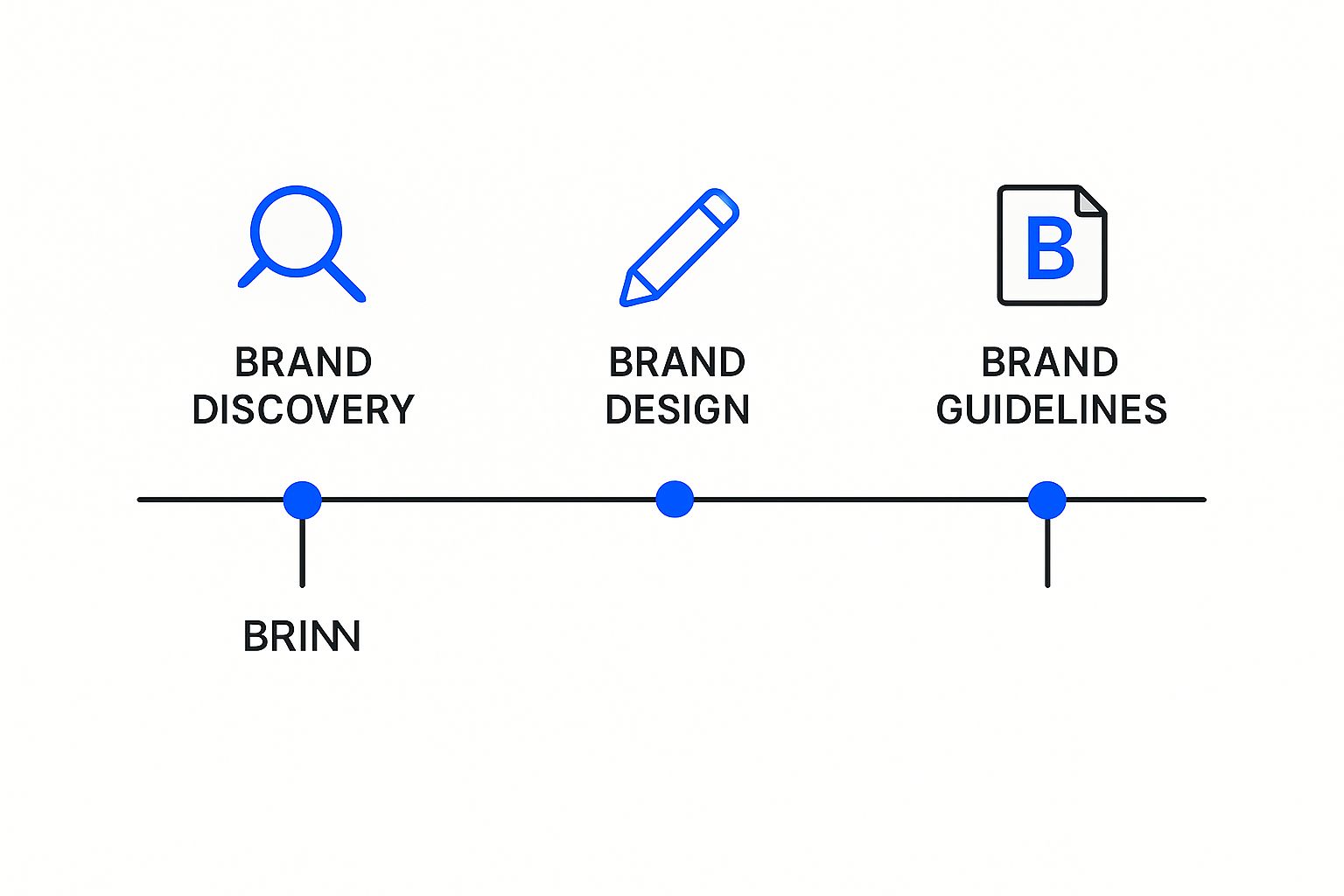
As the infographic shows, a structured approach to brand identity development is essential. Moving sequentially from discovery to design to guidelines creates a cohesive and sustainable brand. Testing brand elements before a full rollout is also critical. This allows for feedback and adjustments before a significant investment.
The following table provides a more detailed breakdown of the timeline:
Brand Identity Development Timeline: A breakdown of the typical timeline for developing a brand identity, showing each phase, activities involved, and estimated duration.
| Phase | Key Activities | Typical Duration | Deliverables |
|---|---|---|---|
| Brand Discovery | Market Research, Competitor Analysis, Target Audience Identification, Stakeholder Workshops | 4-6 Weeks | Research Report, Target Audience Persona, Competitive Analysis Document |
| Brand Design | Logo Design, Color Palette Selection, Typography Selection, Brand Voice Development, Concept Evaluation | 6-8 Weeks | Logo Options, Brand Style Guide (Draft), Mockups |
| Brand Guidelines | Documentation of Logo Usage, Color Codes, Typography Rules, Brand Voice Guidelines | 2-4 Weeks | Final Brand Style Guide, Brand Asset Library |
This table outlines the typical phases, activities, and deliverables involved in building a brand identity. The duration of each phase can vary depending on project complexity and client needs. Having a clear timeline helps manage expectations and ensures the project stays on track.
Ongoing Evolution: Adapting to Change
Building a brand identity isn’t a one-time project. Just as businesses evolve, so should their brand identities. This means regularly reviewing and refining your brand identity to ensure it stays relevant and resonates with your target audience. Understanding how to avoid costly revision cycles and adapt to changing market conditions will ensure your brand identity remains a valuable asset. This ongoing adaptation is crucial for long-term success in a dynamic market.
Digital Brand Identity: Navigating Today’s Complex Landscape

Today’s digital environment offers incredible opportunities for businesses to connect with their audience. However, it also presents some unique challenges when it comes to defining and maintaining a strong brand identity. The multitude of platforms and channels requires a careful approach, balancing consistency with the need to adapt to each specific environment. Businesses need to effectively translate their core brand identity across this expanding digital ecosystem.
Maintaining Cohesion in a Fragmented Online World
One of the biggest hurdles is maintaining a cohesive brand presence across a fragmented online world. Customers interact with brands through various touchpoints, including websites, social media, email campaigns, and online reviews. Each interaction shapes their overall perception of the brand. Consistency is key to creating a unified and memorable brand experience.
For instance, imagine a brand projecting a sophisticated image on its website, but using a casual, unprofessional tone on social media. This disconnect can confuse the audience and weaken the brand message. Maintaining a consistent brand voice and visual identity across all platforms is crucial.
The rapid pace of change in the digital world also demands agility and adaptability. New platforms and technologies constantly emerge, influencing consumer behavior. Brands need to adjust their digital strategies to stay relevant and keep their audience engaged. However, maintaining the core elements of brand identity amidst this constant evolution is paramount. Finding the right balance between adaptation and consistency is crucial for digital success.
Leveraging Digital Tools for Personalized Experiences
While the digital landscape presents challenges, it also provides powerful tools for crafting personalized brand experiences. Through data analytics and targeted marketing, brands can tailor their messaging and offerings to resonate with individual customer preferences. Data analytics done well can significantly increase customer engagement and build loyalty.
However, personalization needs a strategic approach. It’s important to strike a balance between tailoring experiences to individual needs and ensuring every interaction aligns with the core brand identity. Overly aggressive personalization can sometimes compromise brand integrity.
Furthermore, online reviews and social media play a significant role in shaping brand image and reputation. 85% of consumers trust online reviews as much as personal recommendations. This highlights the importance of actively managing your online presence and engaging with customer feedback. Effectively managing your online reputation is essential for defining brand identity in today’s digital world. You might also find valuable insights on mastering small business online marketing here. Building a strong and consistent digital brand identity is an ongoing process that requires careful planning, consistent execution, and continuous adaptation.
Measuring Impact and Evolving Your Brand Identity
Defining your brand identity is crucial. But how do you know if it’s working? It’s not just about basic brand awareness. It’s about understanding how your identity translates into tangible business value. It’s about adapting to your market’s evolving needs. This requires a strategic approach, focusing on key performance indicators (KPIs) beyond vanity metrics.
Establishing Meaningful KPIs: Beyond Vanity Metrics
While likes and shares offer some insight, meaningful KPIs go deeper. They delve into perception and performance. This includes measuring customer sentiment, brand loyalty, and the impact on purchasing decisions.
Tracking customer lifetime value demonstrates long-term impact. It shows how a strong brand identity fosters ongoing relationships, not just one-time purchases. Analyzing website traffic and conversion rates tied to specific branding elements can reveal what resonates with your audience. If you’re building your digital brand identity on Wix, here’s a guide on Wix SEO to improve your online presence.
Brand Audits and Customer Feedback: Listening to the Market
Regular brand audits are essential for understanding market perception. These audits should review all brand touchpoints. This includes your website and social media presence, customer service interactions, and marketing materials. This provides a 360-degree view of your brand’s effectiveness.
Customer feedback is invaluable. Surveys, online reviews, and social media listening provide insights. This data-driven approach informs decisions about evolving your brand identity. This is especially important as businesses grow and target audiences shift.
Evolution vs. Revolution: Knowing When to Adapt
Not every brand needs a complete overhaul. Sometimes, subtle evolution is more effective than drastic revolution. By 2023, more than 75% of businesses prioritized brand strategy investments over infrastructure development. This shows a global shift towards strengthening brand identities. Learn more here. This emphasizes the importance of ongoing brand management.
Understanding the difference between refreshing and rebranding is key. A refresh might involve updating your logo or color palette. A rebrand signifies a more fundamental shift in brand strategy.
Learning from Successes and Failures: Adapting Best Practices
Examining successful brand refreshes, like Apple’s consistent evolution, provides valuable lessons. It’s important to learn from rebranding failures, such as Gap’s 2010 logo mishap. These examples highlight the importance of research, planning, and understanding customer connection.
A strong brand identity is a dynamic asset. It requires continuous monitoring, evaluation, and adaptation. It’s an investment that pays off in long-term customer loyalty, increased market share, and a stronger bottom line.
Defining your brand is just the beginning. Expand your strategy with our brand strategy template, learn to create content that truly converts, and make the most of your efforts with content marketing ROI insights. Also, don’t miss our tips on usability testing for websites.