Best Ecommerce Platform for Beginners in 2025 — Ready to Launch Your Dream Online Store?
Choosing the best ecommerce platform for beginners can be overwhelming. This list simplifies your decision, showcasing the top 8 platforms to kickstart your online business. Learn about the pros and cons of Shopify, Wix eCommerce, Squarespace, BigCommerce, WooCommerce, Weebly, Volusion, and Ecwid. Quickly compare key features and select the perfect solution for your needs, whether you’re selling handmade items or launching a dropshipping business. Find the best ecommerce platform for beginners and start selling online with confidence.
1. Shopify
Shopify consistently ranks as one of the best ecommerce platforms for beginners, and for good reason. It provides a complete, user-friendly solution for starting, growing, and managing an online business. Whether you’re selling handmade crafts, launching a clothing line, or establishing a dropshipping operation, Shopify offers the tools and support you need without requiring extensive technical expertise. Its intuitive interface, comprehensive documentation, and 24/7 customer support make it an ideal choice for entrepreneurs taking their first steps into the world of ecommerce. From setting up your online storefront to managing inventory and processing payments, Shopify streamlines the entire process, allowing you to focus on what matters most – building your brand and connecting with customers.

One of Shopify’s key strengths lies in its accessibility. The platform’s drag-and-drop store builder, coupled with a vast library of mobile-responsive themes, empowers you to create a professional and visually appealing online store without needing to write a single line of code. This is particularly beneficial for beginners who may not have web development experience. Furthermore, Shopify handles all the technical aspects, including hosting, security, and payment processing, allowing you to focus on running your business. You can even leverage Shopify’s built-in payment gateway, Shopify Payments, for streamlined transactions, although be aware of transaction fees if you choose to use a third-party payment provider. For more advanced customization, Shopify uses its own templating language called Liquid. While you can achieve a lot without touching it, learning Liquid opens up a world of design possibilities. Learn more about Shopify and explore its various functionalities. This is particularly relevant for Denver-based businesses and Colorado e-commerce brands looking for local web design and digital growth solutions tailored to their specific needs.
For growing businesses, Shopify’s scalability is a major advantage. As your business expands, you can easily add new features and functionalities through Shopify’s extensive app marketplace, boasting over 6,000 integrations. These apps cater to a wide range of needs, from advanced marketing automation to enhanced customer relationship management. Whether you’re a small business just starting out or a medium-sized enterprise looking for a robust ecommerce solution, Shopify offers the flexibility and scalability to accommodate your growth. This makes it an excellent choice for Denver and Colorado-based SMEs who require tailored web solutions as they expand.
Features:
- Drag-and-drop store builder with mobile-responsive themes
- Built-in payment processing with Shopify Payments
- Comprehensive inventory and order management
- Marketing tools and SEO features
- Extensive app marketplace with 6,000+ integrations
Pros:
- Extremely beginner-friendly with an intuitive interface
- All-in-one solution with hosting, security, and payment processing
- 24/7 customer support via chat, email, and phone
- Scalable for growing businesses
Cons:
- Monthly subscription cost starts at $29/month
- Transaction fees if not using Shopify Payments
- Advanced customization requires knowledge of Liquid (Shopify’s templating language)
- Some essential features require paid apps
Website: https://www.shopify.com/
Shopify is an excellent starting point for entrepreneurs, especially those who prioritize ease of use and a comprehensive, all-in-one solution. While the monthly subscription and potential transaction fees are factors to consider, the platform’s robust features, extensive support, and scalability make it a worthwhile investment for businesses looking to establish a strong online presence.
2. Wix eCommerce
Wix eCommerce stands out as one of the best ecommerce platforms for beginners due to its exceptional user-friendliness and intuitive design. No coding knowledge? No problem. Entrepreneurs can quickly build and launch professional-looking online stores thanks to Wix’s drag-and-drop editor and AI-powered website builder, Wix ADI. This platform offers a streamlined experience for managing products, orders, shipping, and even abandoned cart recovery, all within a single integrated dashboard. With hundreds of customizable templates specifically designed for ecommerce and a suite of secure payment processing options, Wix takes the complexity out of setting up shop online. This makes it a particularly strong option for beginners looking for a fast and easy launch, especially those who prioritize aesthetics and ease of use over advanced ecommerce features.
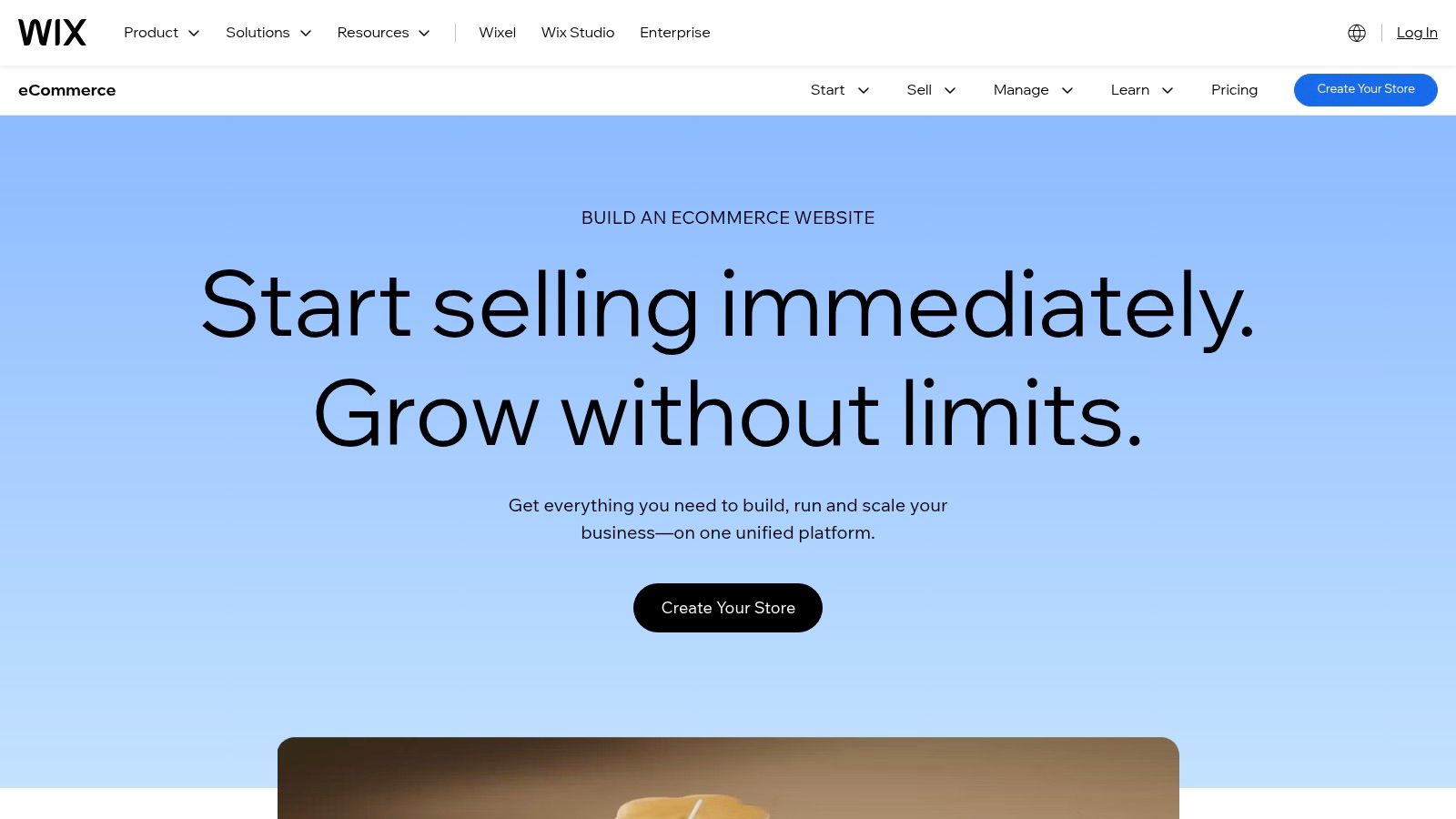
Wix offers a variety of pricing plans, starting with basic website plans and scaling up to dedicated business and ecommerce plans. While specific pricing can vary, the business and ecommerce plans offer features crucial for online stores, such as accepting online payments, connecting custom domains, and removing Wix ads. It’s worth exploring the different tiers to find the best fit for your business needs. Technical requirements are minimal, as Wix is a fully hosted platform. This means all the technical aspects, like hosting, security, and updates, are handled by Wix, allowing you to focus on building and growing your business. This is a key advantage for beginners who may not have technical expertise.
Compared to more advanced platforms like Shopify, Wix sacrifices some scalability and advanced ecommerce functionality for ease of use. This makes it a great option for small to medium-sized businesses or those just starting out, but perhaps less suitable for businesses anticipating very large inventories or complex order fulfillment processes. For example, while Wix provides solid built-in marketing and SEO tools, businesses with highly specialized SEO needs may find the platform limiting compared to solutions offering more granular control. Learn more about Wix eCommerce and other options.
Key Features:
- True drag-and-drop editor: Offering complete design freedom.
- Wix ADI (Artificial Design Intelligence): Automates store creation based on your input.
- 500+ designer-made templates: Including 100+ specifically for ecommerce.
- Built-in abandoned cart recovery emails: Helps recapture lost sales.
- Multiple payment options: With no transaction fees taken by Wix.
Pros:
- Extremely intuitive interface: Ideal for complete beginners.
- No transaction fees: Regardless of the payment processor used.
- Extensive template library: With modern and professional designs.
- Strong built-in marketing and SEO tools: To help promote your store.
Cons:
- Limited scalability: May not be suitable for very large inventories.
- Template lock-in: Cannot switch templates after the site is created.
- Fewer advanced ecommerce features: Compared to dedicated platforms like Shopify.
- Mobile responsiveness: Can be inconsistent with extensive customizations.
If you are a beginner looking for a user-friendly and visually appealing platform to launch your online store, Wix eCommerce is a strong contender. Its ease of use, attractive templates, and integrated features make it a compelling option, particularly for entrepreneurs, Denver-based businesses, and Colorado e-commerce brands looking for a quick and straightforward way to establish their online presence. However, it’s important to be aware of its limitations regarding scalability and advanced features if your business anticipates rapid growth or requires complex functionalities. You can get started with Wix eCommerce at https://www.wix.com/ecommerce/.
3. Squarespace
Squarespace is a visually-focused ecommerce platform perfect for beginners who prioritize aesthetics and ease of use. This all-in-one platform is known for its stunning, professionally designed templates and clean aesthetic, making it a particularly popular choice among creative entrepreneurs, artists, and small businesses looking to establish a polished online presence quickly. With integrated hosting, security, domain registration, and a range of built-in marketing tools, Squarespace simplifies the process of building a beautiful online store without requiring extensive technical knowledge. This makes it a strong contender for the best ecommerce platform for beginners.

Squarespace shines when it comes to visual merchandising. Features like product image zoom and video capabilities allow you to showcase your products in the best possible light. Built-in tax calculation and real-time shipping rates streamline the checkout process for both you and your customers. Furthermore, integrated email marketing and social media tools empower you to connect with your audience and promote your products effectively. The platform also prioritizes security with SSL security and unlimited bandwidth included in all plans. For Denver-based businesses and Colorado e-commerce brands, the sleek, modern designs offered by Squarespace can be a significant advantage in a competitive market.
For entrepreneurs and SMEs needing a tailored web solution that reflects their brand identity, Squarespace’s designer templates provide a strong foundation. While customization options are more limited compared to platforms like Shopify or WooCommerce, the high-quality templates minimize the need for extensive coding or design expertise. This is particularly beneficial for beginners who may not have the resources to hire a web developer.
Squarespace offers various pricing plans starting from around $23/month for the Business plan (which includes basic ecommerce functionality) to $49/month for the Advanced Commerce plan which unlocks features like abandoned cart recovery and advanced discounts. While the basic plan lacks advanced ecommerce features, it’s a good starting point for beginners testing the waters. As your business grows, you can easily upgrade to a more comprehensive plan.
Pros:
- Stunning, professionally designed templates
- All-inclusive platform with no need for additional apps
- Strong blogging capabilities integrated with commerce
- No transaction fees on any business plan
Cons:
- More limited customization options compared to other platforms (e.g., Shopify)
- Fewer integration options than competitors
- Less intuitive editor requiring more learning time
- Basic plan lacks advanced ecommerce features
Implementation Tips:
- Spend time exploring the different templates to find one that best suits your brand aesthetic and product offering.
- Leverage the built-in marketing tools to promote your store and connect with your target audience.
- Take advantage of Squarespace’s extensive support resources and tutorials to familiarize yourself with the platform.
Website: https://www.squarespace.com/
Squarespace earns its place on this list of best ecommerce platforms for beginners due to its user-friendly interface, visually appealing templates, and all-in-one approach. It’s an ideal choice for those who prioritize design and simplicity and want to get their online store up and running quickly. While the limited customization and integrations might be a drawback for some, the ease of use and stunning visuals make it an attractive option for beginners, especially those in visually-driven industries. For event organizers in Denver, the platform’s clean design and potential integrations might be suitable, although exploring specific booking and ticketing system compatibilities is crucial.
4. BigCommerce
BigCommerce stands out as one of the best ecommerce platforms for beginners seeking a balance between ease of use and advanced functionality. While it might have a slightly steeper learning curve than some drag-and-drop website builders, it justifies its place on this list by offering a robust, scalable solution packed with features designed to help your business grow. If you’re looking for an ecommerce platform that can take you from launch to scale without constant platform migrations, BigCommerce is a strong contender.
BigCommerce shines by offering a comprehensive suite of built-in features without relying heavily on apps, unlike some competitors like Shopify. This means you get essential tools like advanced SEO features, multi-channel selling capabilities, and robust performance optimization right out of the box. This can translate to significant cost savings in the long run, as you won’t need to subscribe to multiple apps to achieve the same functionality.
For beginners, the straightforward setup process is a major plus. BigCommerce guides you through the initial stages, making it relatively easy to launch your online store. You can sell unlimited products, benefit from unlimited file storage and bandwidth on all plans, and enjoy industry-leading 99.99% uptime and fast load times, which are crucial for providing a positive customer experience. The ability to sell across multiple channels, including Amazon, eBay, and Instagram, allows you to reach a wider audience and maximize your sales potential. This multi-channel integration is particularly valuable for beginners looking to expand their reach quickly.
Features:
- Robust built-in features without relying on apps
- Sell across multiple channels (Amazon, eBay, Instagram, etc.)
- Unlimited products, file storage, and bandwidth on all plans
- Industry-leading 99.99% uptime and fast load times
- Advanced SEO tools and mobile optimization
Pros:
- No transaction fees on any plan, which can significantly impact your bottom line.
- More built-in features than most competitors, reducing the need for paid apps.
- Excellent SEO capabilities out of the box, helping your store rank higher in search results.
- 24/7 live agent support on all plans provides assistance when you need it most.
Cons:
- Steeper learning curve than some beginner platforms like Wix or Squarespace.
- Annual sales limits on each plan tier, meaning you may need to upgrade as your business grows.
- Template customization can be challenging for beginners without coding experience.
- Higher starting price point at $29.95/month compared to some entry-level platforms.
Pricing and Technical Requirements:
BigCommerce offers a tiered pricing structure starting at $29.95/month. The specific technical requirements are minimal, as BigCommerce is a hosted platform, meaning they handle the technical aspects for you. Essentially, you just need a computer and an internet connection to manage your store.
Implementation/Setup Tips:
- Take advantage of BigCommerce’s extensive documentation and support resources during the setup process.
- Consider using one of their pre-designed templates to get your store up and running quickly.
- Focus on optimizing your product descriptions and images for search engines to maximize your visibility.
Comparison:
Compared to Shopify, another popular ecommerce platform for beginners, BigCommerce offers more built-in features at a comparable price point. While Shopify boasts a larger app store and arguably a simpler interface, BigCommerce’s inclusive feature set can be more cost-effective in the long run. This makes it a strong choice for businesses anticipating rapid growth, as they won’t need to constantly add new apps as their needs evolve.
Website: https://www.bigcommerce.com/
BigCommerce offers a powerful and scalable solution for beginners willing to invest a little more time upfront to learn the platform. Its robust features, focus on SEO, and multi-channel selling capabilities make it a valuable tool for businesses looking to establish a strong online presence and achieve sustainable growth. For entrepreneurs and SMEs seeking a best ecommerce platform for beginners that’s built for scale, BigCommerce is definitely worth considering.
5. WooCommerce
WooCommerce stands out as the best ecommerce platform for beginners seeking maximum control and flexibility, particularly if they’re already comfortable with WordPress or eager to learn. It’s the most popular open-source ecommerce solution available and functions seamlessly as a WordPress plugin. Unlike hosted platforms like Shopify, WooCommerce offers complete ownership of your store and data, allowing for extensive customization to match your brand’s vision. This makes it especially appealing to entrepreneurs who value having full control over their online presence and those who anticipate needing complex functionalities down the line. For example, a Denver-based event organizer could leverage WooCommerce to create a ticketing and booking system directly integrated into their website. Similarly, a Colorado e-commerce brand looking for a highly tailored UX and sales funnel could customize WooCommerce to perfectly match their needs.
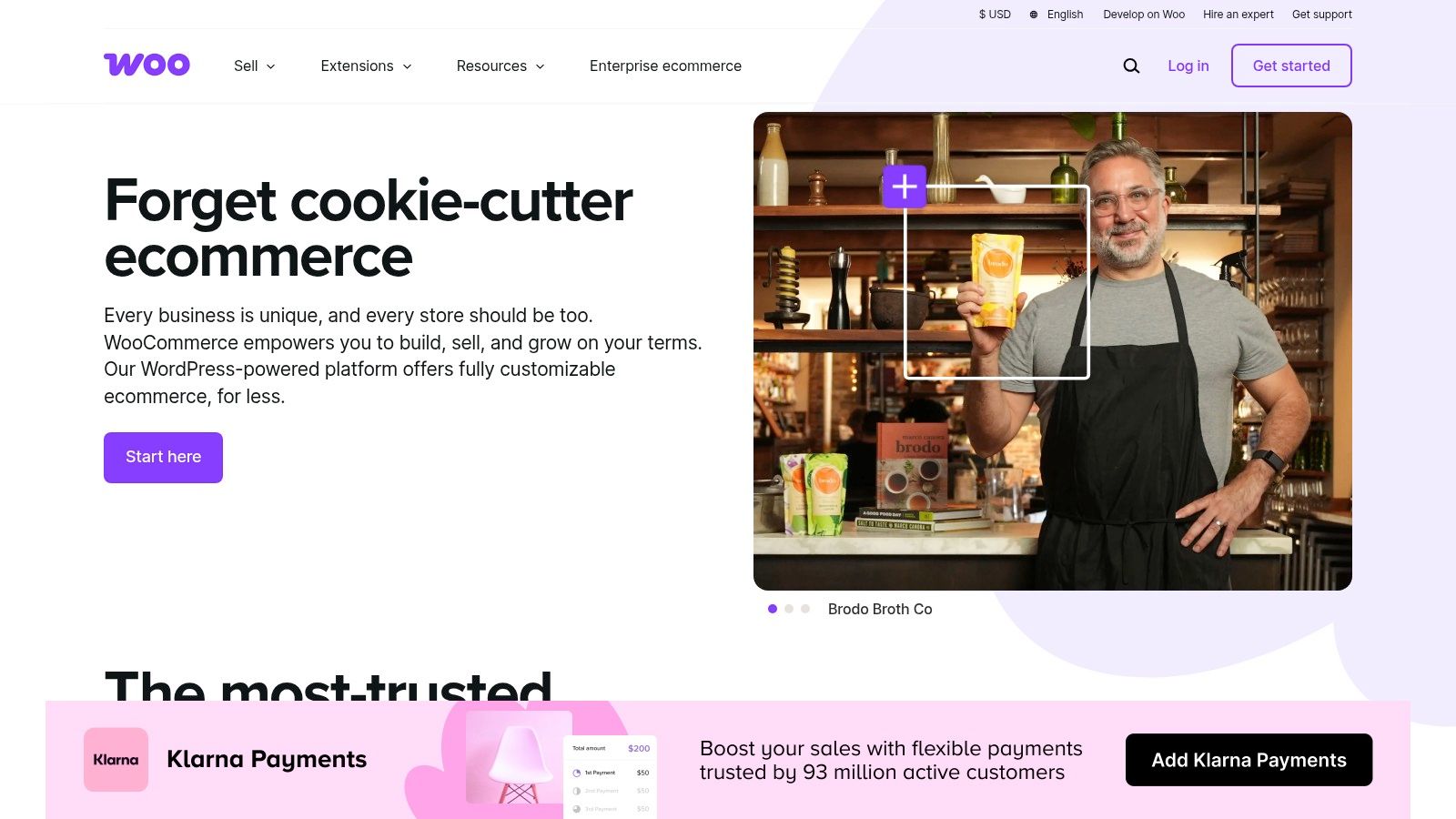
While the base WooCommerce plugin is free, which significantly lowers the initial startup costs for new businesses, it’s essential to factor in additional expenses. These include purchasing a domain name, securing hosting (which can range from budget-friendly shared hosting to more robust dedicated servers), and potentially investing in premium themes and extensions to enhance your store’s functionality and design. For instance, a business needing advanced reporting features or specialized integrations might opt for premium extensions. This modular approach allows you to scale your expenses as your business grows and only pay for the features you need.
The beauty of WooCommerce lies in its unparalleled flexibility and customization options. With thousands of themes and plugins available, you can tailor your store’s appearance and functionality to precisely match your brand identity and target audience. This vast ecosystem caters to diverse needs, whether you’re a small business owner selling handmade goods or a medium-sized enterprise managing a large product catalog. You’re not locked into a specific design or feature set, giving you the freedom to evolve your online store alongside your business. This extensive customization is ideal for SMEs needing tailored web solutions or established companies looking for performance-driven digital advertising fully integrated with their online store.
Despite the benefits, WooCommerce does require more hands-on management compared to hosted platforms. You are responsible for technical maintenance, including security updates, backups, and server management. This can be a learning curve for beginners, but the large and active WooCommerce community offers abundant resources and support. Learn more about WooCommerce for detailed information on the platform. If you’re comfortable managing your own website or willing to invest time in learning, the freedom and control offered by WooCommerce can be highly rewarding.
Key Features:
- Complete control over your store and data
- Unlimited products and categories
- Extensive customization possibilities through themes and plugins
- Large community with abundant resources and support
- Seamless integration with WordPress content management
Pros:
- Free base plugin with low startup costs
- Unmatched flexibility and customization options
- No transaction fees (beyond payment processor fees)
- Massive ecosystem of extensions and integrations
Cons:
- Requires separate hosting and domain purchase
- More technical maintenance responsibility
- Security and updates must be managed manually
- Costs can add up with premium extensions and themes
Website: https://woocommerce.com/
6. Weebly
Weebly, now a part of Square, stands out as one of the best ecommerce platforms for beginners due to its unparalleled simplicity. If you’re looking for a hassle-free way to establish your online presence, Weebly’s intuitive drag-and-drop interface and clean design make the process remarkably accessible. This platform prioritizes ease of use, making it ideal for small businesses and entrepreneurs with limited technical expertise and modest inventories who want to get their online store up and running quickly. The seamless integration with Square also provides a robust solution for businesses looking to unify their online and in-person sales operations. This makes it particularly attractive for businesses who already use Square or plan to incorporate physical sales alongside their ecommerce venture.
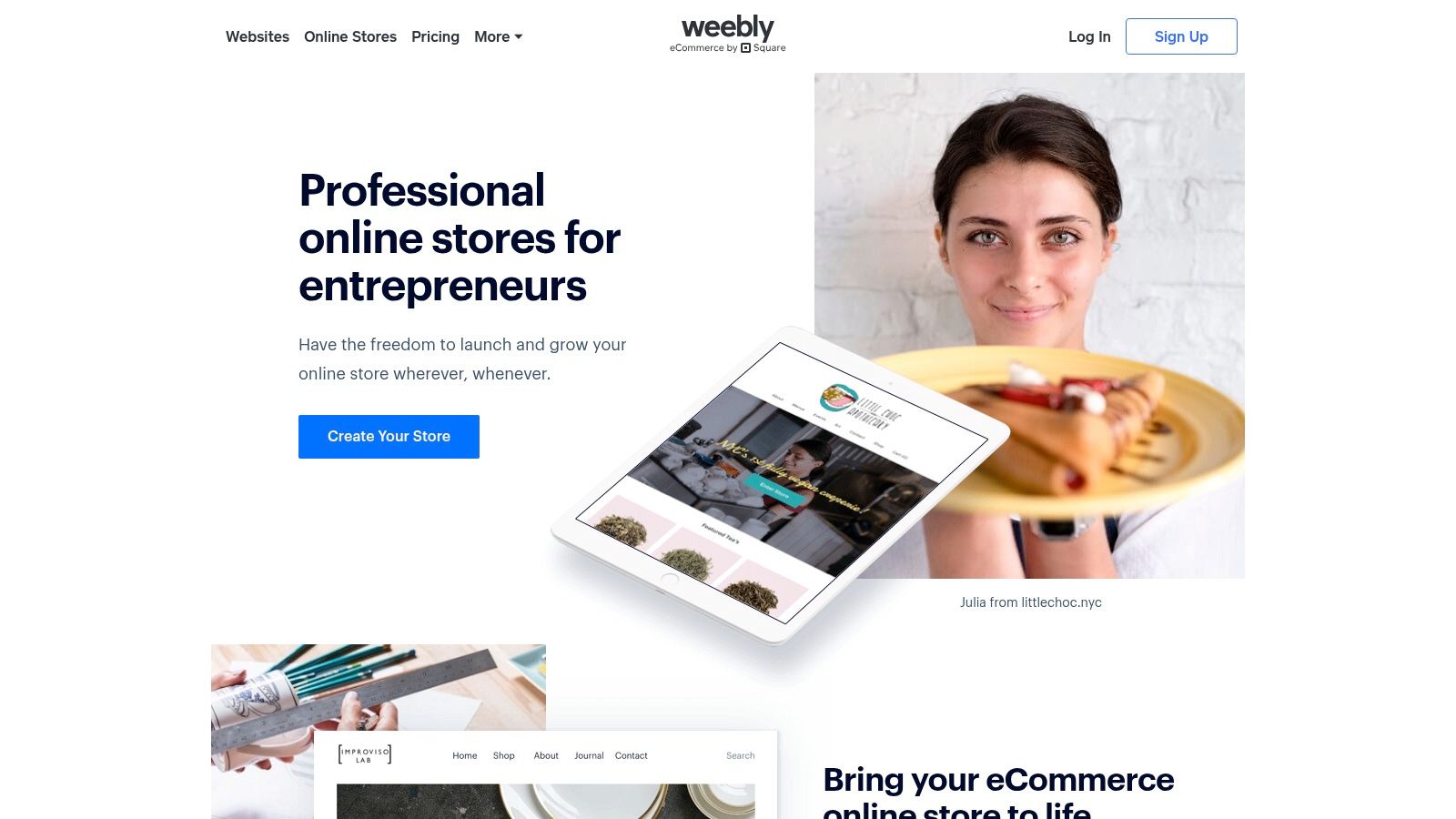
Weebly offers a free plan which allows you to familiarize yourself with the platform, albeit with Weebly branding. For full ecommerce functionality and your own branding, paid plans start at a competitive $12/month. One significant advantage of using Weebly with Square is the absence of transaction fees when processing payments through Square, unlike some other platforms that impose additional costs. The built-in SEO tools and marketing features further empower beginners to optimize their online store for visibility and reach their target audience effectively.
Features:
- Incredibly simple drag-and-drop site builder
- Free plan available to test the platform (with Weebly branding)
- Seamless integration with Square POS for in-person selling
- Mobile app for store management on the go
- Built-in SEO tools and marketing features
Pros:
- One of the easiest platforms for complete beginners
- Affordable pricing starting at $12/month for ecommerce
- No transaction fees when using Square payments
- Strong inventory management for small catalogs
Cons:
- Limited design flexibility compared to competitors like Shopify or WooCommerce, making it less suitable for businesses requiring highly customized storefronts.
- Fewer advanced ecommerce features than more robust platforms. This might become a limitation as your business grows.
- Smaller app marketplace than platforms like Shopify, restricting the extensibility and integration options.
- Less suitable for scaling beyond small businesses. If you anticipate significant growth, you might need to migrate to a more scalable platform in the future.
Implementation/Setup Tips:
- Start with the free plan to get a feel for the platform before committing to a paid subscription.
- Take advantage of Weebly’s excellent support resources and tutorials to guide you through the setup process.
- If you plan to sell both online and in person, connect your Square account from the outset to streamline your operations.
- Utilize the built-in SEO tools to optimize your product descriptions and website content for search engines.
Comparison with Similar Tools:
Compared to platforms like Shopify and WooCommerce, Weebly prioritizes simplicity over advanced features. Shopify offers more extensive customization options and a larger app ecosystem, but it comes at a higher price point. WooCommerce, being a WordPress plugin, offers greater flexibility and control, but requires more technical expertise to set up and manage. Weebly hits the sweet spot for beginners who value ease of use and affordability above all else.
Website: https://www.weebly.com/online-store
Weebly deserves its place on this list of the best ecommerce platforms for beginners because it removes the technical hurdles and empowers anyone to create a functional and attractive online store quickly. It’s particularly well-suited for entrepreneurs, small businesses, and even event organizers in Denver or Colorado looking to establish a simple yet effective online presence, perhaps even integrated with a physical point-of-sale system thanks to the Square integration. If you’re just starting out and prioritize simplicity and affordability, Weebly is an excellent choice.
7. Volusion
Volusion is a dedicated ecommerce platform specifically designed for selling physical products, making it a strong contender for the best ecommerce platform for beginners. With over two decades of experience in the industry, Volusion offers a streamlined experience tailored for launching and growing product-based businesses. Its emphasis on robust inventory management, integrated SEO tools, and the notable absence of transaction fees makes it a compelling option for new merchants. Volusion strikes a balance between user-friendliness and comprehensive ecommerce functionality, empowering beginners with data and analytics to understand and optimize their business performance. This makes it particularly attractive for those prioritizing data-driven decision-making.
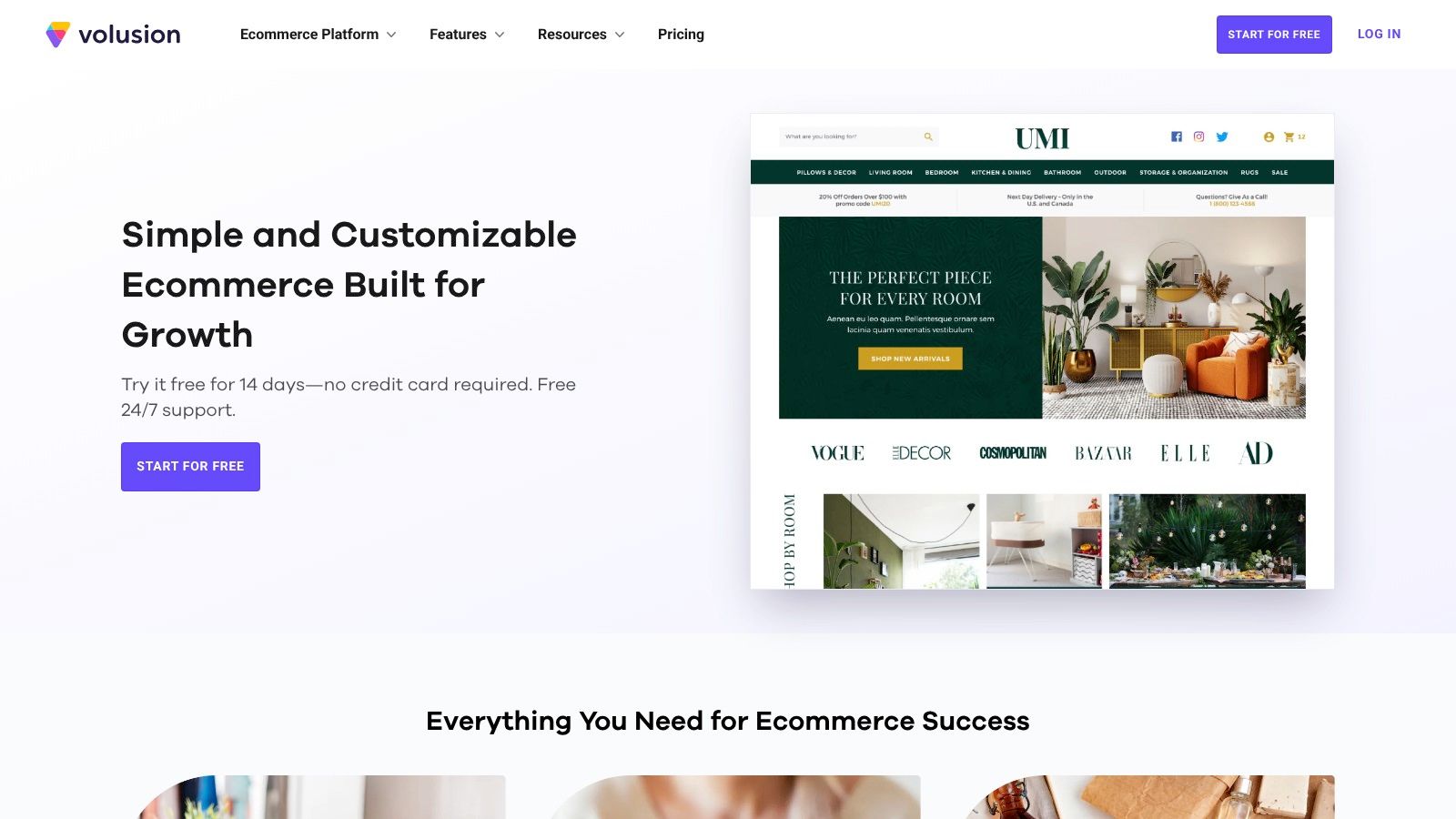
Volusion deserves a spot on this list because of its targeted approach to product-based businesses. Features like the built-in inventory management system with stock alerts and a comprehensive analytics suite provide valuable tools for managing and scaling a growing online store. The integrated CRM system allows for personalized customer interactions, fostering loyalty and repeat business. One-page checkout simplifies the purchasing process for customers, potentially improving conversion rates, a crucial metric for any ecommerce business. The built-in tax calculator and shipping integrations further streamline operations, eliminating the need for third-party tools and simplifying administrative tasks. This is particularly beneficial for beginners navigating the complexities of online sales tax and shipping logistics.
For entrepreneurs and SMEs launching their first online store, Volusion’s focus on data analysis is a key advantage. By providing clear insights into sales trends, customer behavior, and product performance, Volusion empowers beginners to make informed decisions about inventory, marketing, and overall business strategy. This focus on data makes Volusion a valuable tool for beginners who want to understand their market and adapt quickly.
Features:
- Built-in inventory management system with stock alerts
- Comprehensive analytics and reporting tools
- One-page checkout for improved conversion rates
- Built-in tax calculator and shipping integrations
- Customer relationship management (CRM) system included
Pros:
- No transaction fees on any plan
- Strong focus on analytics for data-driven decisions
- Excellent inventory management for physical products
- 24/7 customer support available on all plans
Cons:
- No built-in blog functionality, limiting content marketing opportunities. While SEO tools are included, the lack of a blog might necessitate using a separate platform for content creation.
- Limited free themes compared to competitors like Shopify. This might restrict design flexibility for budget-conscious beginners.
- Product and bandwidth limits on lower-tier plans could pose challenges for rapidly growing businesses. Careful consideration of scalability is needed when choosing a plan.
- The interface, while functional, is less intuitive compared to some other beginner-focused platforms, potentially requiring a slightly steeper learning curve.
Website: https://www.volusion.com/
Implementation Tips:
- Start with a lower-tier plan and upgrade as your business grows to avoid unnecessary costs initially.
- Utilize the robust inventory management features from the outset to maintain accurate stock levels and prevent overselling.
- Take advantage of the analytics dashboard to track key performance indicators (KPIs) and identify areas for improvement.
- Leverage the built-in SEO tools to optimize product listings and improve search engine visibility.
While Volusion might present a slightly steeper learning curve compared to some drag-and-drop website builders, its powerful features and focus on data-driven decision-making make it a robust choice for beginners serious about building a successful online store. Its comprehensive toolset makes it particularly well-suited for businesses prioritizing efficient inventory management and data analysis, allowing them to scale and adapt effectively in the competitive ecommerce landscape. For Colorado e-commerce brands and Denver-based businesses looking for a platform specifically designed for selling physical products, Volusion presents a viable option worthy of consideration.
8. Ecwid
Ecwid stands out as one of the best ecommerce platforms for beginners, especially those who already have an online presence and want a simple way to start selling. Unlike other platforms that require building a standalone store, Ecwid seamlessly integrates with your existing website, whether it’s built on WordPress, Wix, or even just a Facebook or Instagram page. This approach significantly reduces the technical hurdles often associated with setting up an online shop, making it ideal for entrepreneurs taking their first steps into ecommerce. This streamlined approach lets you focus on your products and marketing, rather than getting bogged down in website design. For example, a food blogger with an established WordPress site can easily add an Ecwid store to sell branded merchandise or recipe books directly to their audience without needing to migrate their existing content or learn complex ecommerce platform functionalities.
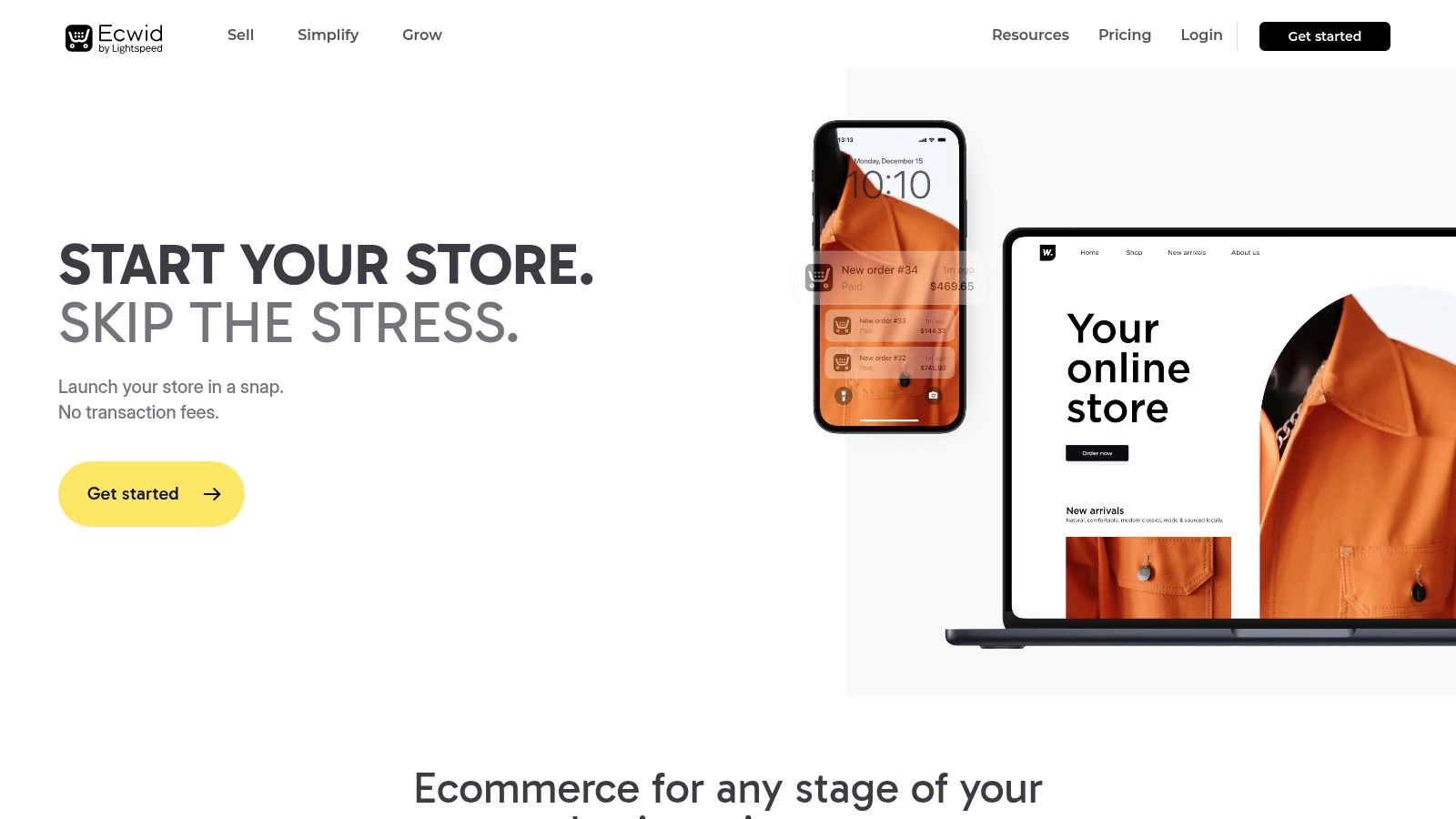
One of Ecwid’s major advantages for beginners is its generous free plan. This plan allows you to list up to 10 products, making it perfect for testing the waters of online selling without any financial commitment. As your inventory grows, you can seamlessly upgrade to a paid plan that accommodates more products and unlocks additional features. This scalability makes Ecwid a viable long-term solution, even as your business expands. Ecwid also simplifies complex tasks like tax calculations and shipping, automating these processes and saving you valuable time and effort. This allows you to focus on crucial aspects of your business like marketing and customer service.
Compared to more comprehensive ecommerce platforms like Shopify or WooCommerce, Ecwid simplifies the setup process significantly. No design skills are necessary, as the shopping cart seamlessly integrates with your existing site’s design. This eliminates the need for extensive customization and coding, further reducing the learning curve for beginners. Managing your inventory, orders, and customer communication is centralized through a single dashboard, even if you are selling across multiple platforms. This simplifies administrative tasks and provides a clear overview of your sales performance.
Features:
- Embeddable shopping cart for existing websites
- Omnichannel selling across websites, social media, and marketplaces
- Single dashboard to manage all sales channels
- Permanent free plan for up to 10 products
- Automated tax calculation and real-time shipping rates
Pros:
- Free plan available for small inventories
- Easy integration with existing websites and platforms
- Simplified setup process compared to full ecommerce platforms
- No design skills needed as it adapts to your existing site
Cons:
- Less comprehensive than full ecommerce platforms like Shopify. While ideal for beginners, businesses with complex needs may find Ecwid’s feature set limiting.
- Limited design control over the shopping experience. Customization options are restricted, particularly on lower-tier plans.
- Advanced features only available on higher-tier plans. Features like abandoned cart recovery and automated marketing emails require a paid subscription.
- Not ideal for businesses wanting a standalone store. Ecwid’s strength lies in its integration capabilities, not in building independent online stores.
Pricing: Free plan available for up to 10 products; paid plans start at $15/month.
Website: https://www.ecwid.com/
Ecwid’s simplicity and seamless integration make it an excellent choice for beginners, particularly those who already have an established online presence. Its free plan allows for risk-free experimentation, while its scalable nature ensures it can grow alongside your business. For entrepreneurs looking for a quick and easy way to start selling online without the complexities of full-fledged ecommerce platforms, Ecwid deserves serious consideration as one of the best ecommerce platforms for beginners.
Beginner-Friendly Ecommerce Platform Comparison
| Platform | Core Features & Functionality | User Experience & Quality ★ | Value & Pricing 💰 | Target Audience 👥 | Unique Selling Points ✨ |
|---|---|---|---|---|---|
| Shopify | Drag-and-drop builder, payment processing, 6,000+ apps | ★★★★☆ Beginner-friendly, 24/7 support | 💰 From $29/mo, transaction fees | Small to large businesses | 🏆 All-in-one, scalable, extensive app ecosystem |
| Wix eCommerce | AI builder, 500+ ecom templates, abandoned cart recovery | ★★★★☆ Intuitive, ideal for beginners | 💰 Moderate, no transaction fees | Beginners, small-medium stores | ✨ Wix ADI AI, no transaction fees |
| Squarespace | Designer templates, email & social tools, SSL included | ★★★★☆ Visually stunning, less intuitive editor | 💰 Mid-tier, no transaction fees | Creatives, artists, small biz | 🏆 Award-winning designs, all-in-one platform |
| BigCommerce | Multi-channel selling, unlimited products, SEO optimized | ★★★★☆ Robust but steeper learning curve | 💰 $29.95+/mo, no transaction fees | Growing businesses, scaling stores | ✨ Built-in advanced features, excellent SEO |
| WooCommerce | Open source, full store control, WordPress integration | ★★★☆☆ Flexible but requires technical setup | 💰 Free base + hosting costs | WordPress users, custom stores | 🏆 Free plugin, unbeatable customization |
| Weebly | Simple drag-drop, Square POS integration, mobile app | ★★★☆☆ Easiest for beginners | 💰 From $12/mo, no transaction fees | Small businesses, beginners | ✨ Square POS integration, affordability |
| Volusion | Inventory mgmt, CRM, analytics, one-page checkout | ★★★☆☆ Data-focused, less intuitive | 💰 Moderate, no transaction fees | Product-based businesses | ✨ Strong analytics, CRM for ecommerce |
| Ecwid | Embeddable cart, omnichannel, free plan up to 10 products | ★★★☆☆ Simple setup, less design control | 💰 Free & paid plans, volume-based | Existing sites wanting ecommerce | ✨ Embed anywhere, omnichannel sales, free plan |
Need Help Building Your Online Store?
Choosing the best ecommerce platform for beginners can feel overwhelming with so many options available. This article has explored eight popular platforms, from the simplicity of Wix eCommerce and Squarespace to the robust features of Shopify and BigCommerce. We also looked at WooCommerce for WordPress users, the affordability of Weebly, the all-in-one solution of Volusion, and the flexibility of Ecwid. Key takeaways include considering your budget, technical skills, desired level of customization, and the specific needs of your business. For example, if you anticipate scaling rapidly, a platform like Shopify or BigCommerce might be a better fit than Squarespace. If you’re comfortable with WordPress, WooCommerce offers extensive customization options.
Implementing your chosen platform effectively is crucial. Think about factors like SEO, mobile responsiveness, security, and integration with other business tools. Abandoned carts are a major issue for ecommerce businesses. If you’re using Shopify, learn how to identify and recover lost sales with these proven strategies from the Ultimate Guide to Shopify Abandoned Carts: Why They Happen and How to Fix Them by CartBoss. Finding the right platform is just the first step; building a thriving online store takes ongoing effort.
Launching a successful online store can be complex, especially for beginners. Denver Web Design Studio specializes in helping SMEs, entrepreneurs, and established businesses navigate these challenges by creating high-performing ecommerce websites on platforms like WordPress and Shopify. We can guide you in selecting the best ecommerce platform for beginners, then design, develop, and market your online store for maximum impact. Contact Denver Web Design Studio today to discuss your project and take your business to the next level.