The Anatomy of High-Converting Lead Generating Websites
A lead generating website isn’t just a static online presence; it’s a dynamic tool built to attract, engage, and convert visitors into valuable leads. What separates a high-performing lead generation website from a standard one? It’s the strategic combination of design, content, and user experience.
Key Elements of a High-Converting Website
Several crucial components work together to make a website a lead-generating powerhouse. Let’s take a closer look at some of the most important ones.
- Compelling Calls to Action (CTAs): CTAs guide your visitors towards conversion. They should be clear, concise, action-oriented, and strategically placed throughout your website. Instead of a generic “Contact Us,” use specific CTAs like “Get Your Free Consultation” or “Download Our Guide.”
- Psychology-Driven Content: Understanding your audience’s needs and motivations is key. Create content that addresses their pain points, provides solutions, and builds trust. Speak their language and highlight the benefits they’ll receive. You might find helpful advice in this article on website navigation best practices.
- Intuitive User Experience: A seamless and intuitive user experience is paramount. Your website is the foundation of your lead generation strategy, playing a central role in B2B marketing growth. Ensure clear navigation, fast page load times, and a responsive design across all devices.
- Strategic Lead Magnets: Offering valuable resources, such as ebooks, checklists, or free tools, in exchange for contact information is a proven lead generation tactic. Consider the evolving landscape of lead magnets, with free SaaS tools gaining traction. These mini software tools offered as giveaways can significantly boost keyword searches, sometimes increasing low-difficulty keyword searches by 500 to 7,200 monthly searches. For more statistics on lead magnets, see this resource.
To understand the difference between standard websites and those optimized for lead generation, take a look at the table below. It outlines the essential elements that contribute to higher conversion rates.
Essential Elements of Lead Generating Websites
| Website Element | Standard Website Approach | Lead Generating Website Approach | Impact on Conversion |
|---|---|---|---|
| Call to Actions | Generic, limited placement | Clear, specific, strategically placed throughout the site | Increased click-through rates and lead capture |
| Content | General information, company-focused | Addresses user needs, provides solutions, builds trust | Higher engagement, longer time on site |
| User Experience | Basic navigation, may not be mobile-friendly | Intuitive navigation, fast loading, mobile-responsive | Reduced bounce rate, improved user satisfaction |
| Lead Magnets | Few or no incentives for lead capture | High-value resources offered in exchange for contact information | Significantly increased lead generation |
As you can see, a lead generation focused website prioritizes user experience and provides valuable resources in exchange for contact information, leading to a substantial increase in leads.
Visualizing the Impact
The following infographic visually represents the difference between a generic website and a lead-generating website, focusing on bounce rate and conversion rate.
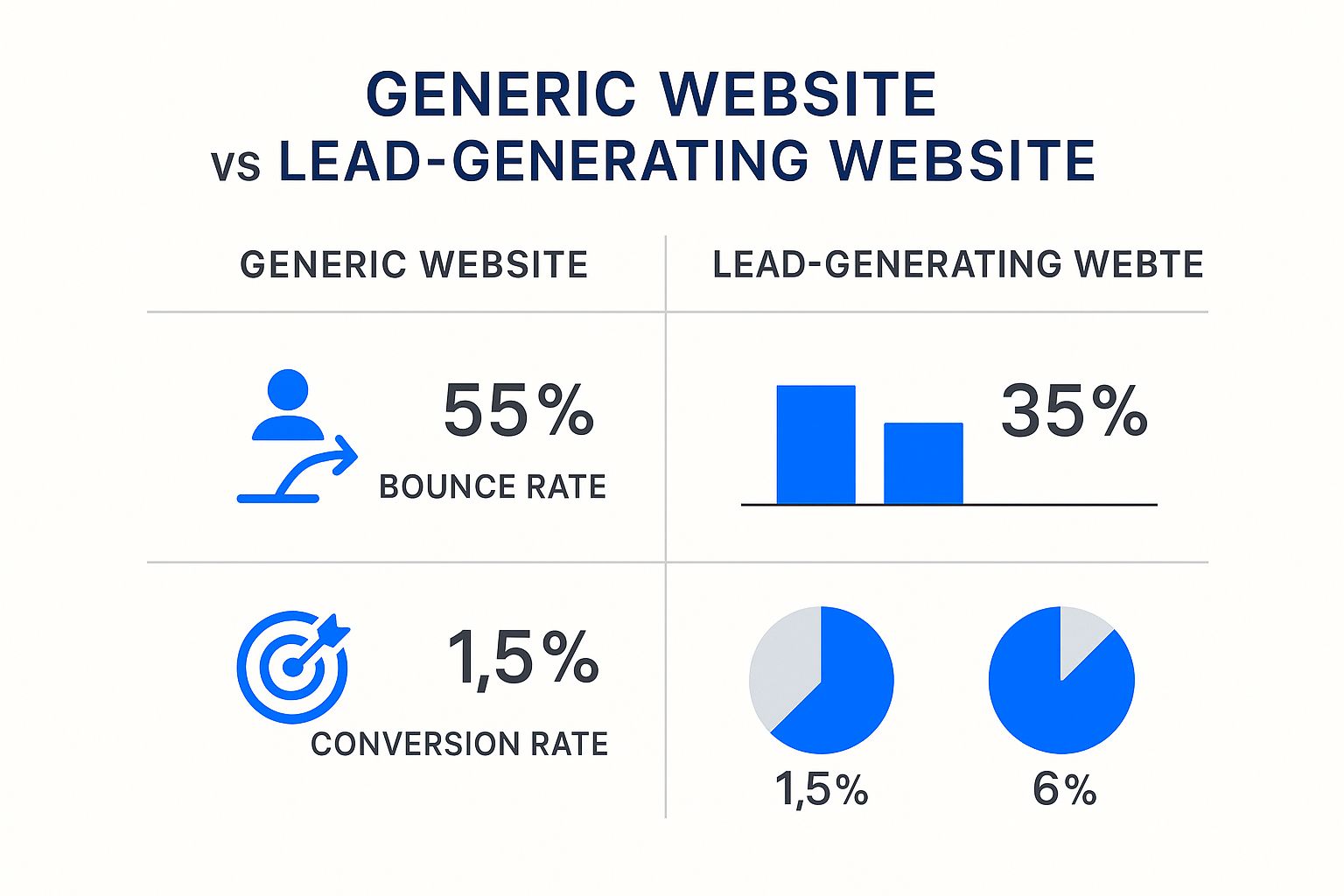
The infographic highlights the significantly lower bounce rate (35% vs. 55%) and the much higher conversion rate (6% vs. 1.5%) of a lead-generating website. This emphasizes the importance of implementing the elements discussed above. A well-optimized website can dramatically improve your bottom line by capturing more leads and driving business growth, resulting in more targeted marketing and a greater ROI.
Crafting Irresistible Lead Magnets Worth Trading Contact Info For
Creating a lead-generating website depends on offering something valuable in return for contact information. Forget generic PDFs. Today’s online audience demands real value. This means crafting lead magnets—compelling incentives—that prospects actively seek.
Understanding Your Audience
The first step in creating effective lead magnets involves understanding your target audience. What are their pain points? What challenges do they face? What information would truly help them? By addressing these specific needs, your lead magnet will resonate and encourage conversions.
Lead Magnet Formats That Work
Several formats can be effective, depending on your audience and industry.
- Checklists and Worksheets: These offer practical, actionable advice prospects can use immediately.
- Templates and Spreadsheets: These provide a framework that simplifies complex tasks.
- Webinars and Online Workshops: These offer interactive learning and the chance to engage with your expertise directly. Tools like Zoom can be helpful for hosting these.
- Free Tools and Trials: These let prospects experience the value of your product or service firsthand.
- Exclusive Content and Reports: These provide in-depth insights and valuable information unavailable elsewhere.
For example, if you target small business owners, a checklist on “10 Steps to Optimize Your Website for Local SEO” is more appealing than a generic ebook on “The Importance of SEO”.
Positioning and Presentation
Even the best lead magnet will fail without proper positioning and presentation. You must highlight the benefits, emphasize exclusivity, and simplify the download process. A clear call to action, compelling visuals, and a user-friendly landing page are crucial for maximizing conversions. Learn more in our article about how to master email marketing for your small business.
Showcasing Your Expertise Without Giving It All Away
The key to a successful lead magnet is providing substantial value while leaving prospects wanting more. Think of it as a movie trailer—it generates interest without revealing the entire plot. Your lead magnet should solve a specific problem or offer valuable insights, but also showcase your expertise and encourage further engagement. This might be a consultation, a demo, or access to a premium product or service. This strategic approach will transform your lead-generating website into a powerful engine for business growth.
Leveraging Social Proof to Transform Visitors Into Qualified Leads

In the online world, trust is essential for success. A lead-generating website must build credibility to convert visitors into qualified leads. One of the most effective ways to achieve this is through social proof. This involves showcasing endorsements and validation that resonate with your target audience.
Understanding the Power of Social Proof
Social proof is a powerful psychological phenomenon where people tend to follow the actions of others. They assume that these actions reflect the correct behavior. For a lead-generating website, this means demonstrating that others trust and value what you offer. This can significantly influence visitor behavior and boost your conversion rates.
Types of Social Proof for Lead Generation
Several types of social proof can strengthen your website’s credibility:
- Client Testimonials: Authentic testimonials from satisfied clients provide strong validation. Showcase specific results and quantify the benefits whenever possible.
- Case Studies: In-depth case studies tell compelling stories of how your offerings have solved real-world problems for other businesses.
- Platform Reviews: Positive reviews on platforms like Google, Yelp, or industry-specific review sites offer independent validation and build trust.
- Industry Recognition: Awards, certifications, and media mentions demonstrate expertise and establish authority. This can significantly enhance your brand’s reputation, particularly in competitive industries.
- Social Media Engagement: A strong social media presence with active engagement can be a potent form of social proof. It indicates a thriving community and positive brand perception. LinkedIn is increasingly influential in lead generation, with 38% of marketers already using it. The platform is projected to reach nearly 943 million users by 2028. Learn more about lead generation statistics here.
Strategic Placement of Social Proof
The placement of social proof is key for maximizing its impact. Consider these strategic locations:
- Landing Pages: Placing testimonials and case studies near call-to-action buttons reinforces value and encourages conversions.
- Product Pages: Displaying reviews and industry recognitions builds trust and reduces purchase anxieties.
- About Us Page: Featuring client testimonials and social media engagement metrics humanizes your brand and builds rapport.
From Generic Endorsements to Conversion Catalysts
Generic endorsements are less effective than targeted social proof. Tailor your social proof to address specific prospect concerns and motivations. Highlight testimonials that speak directly to the benefits you offer. Showcase case studies that resonate with the visitor’s industry or specific challenges.
By strategically leveraging social proof, your website can effectively build trust and convert visitors into qualified leads. This approach creates a powerful synergy between credibility and conversion, driving meaningful results for your business.
Building Landing Pages That Actually Convert (Not Just Look Pretty)
A beautiful landing page is only the first step. Turning a visually appealing design into a lead-generating machine requires a strategic blend of design and psychology. The most effective landing pages aren’t just aesthetically pleasing; they’re built for conversions.
The Psychology of Conversion
Think of your landing page as your best salesperson. It needs to grab attention, build interest, create desire, and ultimately, prompt action. This process relies on understanding your visitors’ psychology. What are their motivations? What are their pain points? What are their potential objections? Successful companies use techniques like message matching. This is where the landing page copy directly reflects the ad or link that brought the visitor there, creating a sense of continuity and reinforcing their intent.
Visual Hierarchy and User Experience
A well-designed landing page guides the visitor’s eye toward the desired action. This is achieved through a clear visual hierarchy. Using elements like headings, subheadings, images, and whitespace emphasizes key information and creates a natural flow. The user experience is also critical. A cluttered, confusing, or slow-loading page can quickly lead to visitors abandoning the page. You might be interested in: How to master website design for small businesses.
Crafting Compelling Content
The content on your landing page needs to be persuasive and concise. Headlines must stop the scroll, while the body copy should address the visitor’s needs and highlight the benefits of your offer. Objection handling is crucial. Anticipate potential concerns and address them proactively within your copy. This builds trust and reduces hesitation.
Streamlining the Form Experience
The form is the critical point of conversion. A long or complicated form can significantly deter conversions. Minimize the number of fields, use clear labels, and consider progressive profiling. This technique gathers additional information over time, making the initial form less daunting.
To further illustrate how different landing page elements impact conversion rates, take a look at the table below:
Landing Page Conversion Statistics: Data showing how specific landing page elements impact conversion rates across different industries.
| Landing Page Element | Average Impact on Conversion Rate | B2B Impact | B2C Impact | Implementation Difficulty |
|---|---|---|---|---|
| Compelling Headline | +20% | +15% | +25% | Easy |
| Clear Call to Action | +15% | +10% | +20% | Easy |
| Concise Form | +10% | +8% | +12% | Medium |
| Testimonials/Social Proof | +5% | +7% | +3% | Medium |
| High-Quality Images/Videos | +8% | +5% | +10% | Medium |
As you can see, elements like headlines and calls to action offer substantial potential for increasing conversion rates. While factors like testimonials and visuals also contribute, they generally have a more moderate impact. Implementation difficulty should also be considered when prioritizing optimization efforts.
Testing and Optimization: The Key to Continuous Improvement
Even the best landing pages can be improved. Smart marketers understand the importance of A/B testing different elements, such as headlines, calls to action, and form layouts. By continually analyzing visitor behavior and making data-driven adjustments, they ensure their landing pages stay effective and adapt to changing trends. This creates pages that consistently convert at high rates, rather than simply following fleeting design trends.
The Science of Lead Capture Forms That People Actually Complete
Forms act as a crucial bridge, connecting website visitors with potential leads. They represent a pivotal moment: when a prospect decides if your offered value warrants sharing their personal information. This section delves into the science behind creating forms that encourage completion, turning curious visitors into qualified leads.
Psychology of Form Completion
Grasping the psychology of form completion is key. It involves finding a balance between collecting necessary information and respecting a visitor’s time and privacy. Individuals are more inclined to complete a form when they perceive a tangible benefit, trust the website, and find the process quick and easy. This explains why shorter forms often outperform longer ones.
Optimizing Form Fields for Conversions
- Field Sequencing: The order of your fields matters. Begin with simple information like name and email address. Requests for more sensitive data, like phone numbers or job titles, should follow later, after trust has been established.
- Information Hierarchy: Prioritize essential information. If certain fields aren’t crucial for initial contact, consider removing them or employing progressive profiling. This technique gathers additional information gradually, beginning with a concise initial form. It respects user privacy while still enabling more thorough lead qualification.
- Friction Reduction: Minimize any obstacles that hinder completion. Use clear labels, provide input examples, and ensure mobile-friendliness. Auto-filling fields, where possible, can also significantly reduce friction.
The Power of Microcopy and Conditional Logic
Microcopy—the small bits of text within and around your forms—plays a surprisingly important role in conversion rates. Explaining why you need specific information, reassuring visitors about data privacy, and providing clear instructions can substantially boost submissions.
Furthermore, using conditional logic, where subsequent fields adapt based on previous answers, can personalize the experience and collect more relevant information. For example, inquiring about company size only if a visitor identifies as a business owner creates a more tailored and efficient form.
Real-World Examples and Practical Frameworks
Small changes to forms can yield major improvements. One company witnessed a 20% increase in conversions simply by reducing the number of required fields. Another observed a 15% lift by adding microcopy that explained how the collected information would be used. These examples showcase the impact of carefully evaluating every part of the form experience. To delve deeper, explore the latest insights on form design best practices.
By implementing these principles—understanding user psychology, optimizing fields, and strategically utilizing microcopy—your lead generating website can transform hesitant visitors into engaged leads, ultimately fueling business growth and delivering tangible results.
Building Trust Elements That Turn Skeptics Into Leads

Online shoppers are bombarded with information. This constant influx of data makes many wary of sharing personal details. Building trust is essential for turning hesitant visitors into solid leads.
Identifying Key Trust Signals
Websites that successfully generate leads use credibility signals. These signals reassure visitors, building confidence in a site’s legitimacy and offerings.
- Security Badges: Displaying recognizable security badges, such as SSL certificates from a provider like Sectigo, shows visitors their information is safe. This is particularly important for e-commerce sites.
- Transparent Policies: Clearly presented privacy, terms of service, and refund policies demonstrate openness. Make sure these policies are easy to find and understand.
- Industry Credentials and Affiliations: Showcasing relevant certifications, awards, and professional memberships establishes your expertise. This can be especially helpful in specialized industries.
- Client Testimonials and Case Studies: Real customer stories provide powerful social proof. Include specific details and quantifiable results for maximum impact.
- Contact Information and Physical Address: Providing clear contact information, including a physical address, makes your business more approachable and legitimate.
Understanding the Psychology of Trust
Trust takes time. It’s a process influenced by several psychological factors. Consistency is one key element. A consistent brand message, visual identity, and user experience build a sense of reliability. Reciprocity is another important factor. Offering valuable free resources, like guides or webinars, builds goodwill and encourages information sharing. For further insights on optimizing forms, explore these form design best practices.
Tailoring Trust Elements to Your Audience
Different trust elements appeal to different audiences. Security badges might be crucial for e-commerce, while industry credentials might be more important for a consulting firm. Understand your target audience’s priorities to choose the most effective trust signals.
Creating Compelling Trust Narratives
Top brands weave trust elements into compelling trust narratives. These narratives demonstrate expertise, authenticity, and genuine care, resonating with the audience on an emotional level. For example, showcasing client outcomes highlights the positive impact of your services on real people.
By understanding the psychology of trust, identifying key signals, and tailoring your approach, you can convert skeptical visitors into confident leads. This helps you build a loyal customer base and a strong reputation. Contact Denver Web Design Studio today to learn more about how we can help your business grow.